Spokane, Washington
The Best Home Décor Fabrics in the Spokane Area
By Sage McKenzie, Pacific Northwest Textile Writer · July 24, 2026
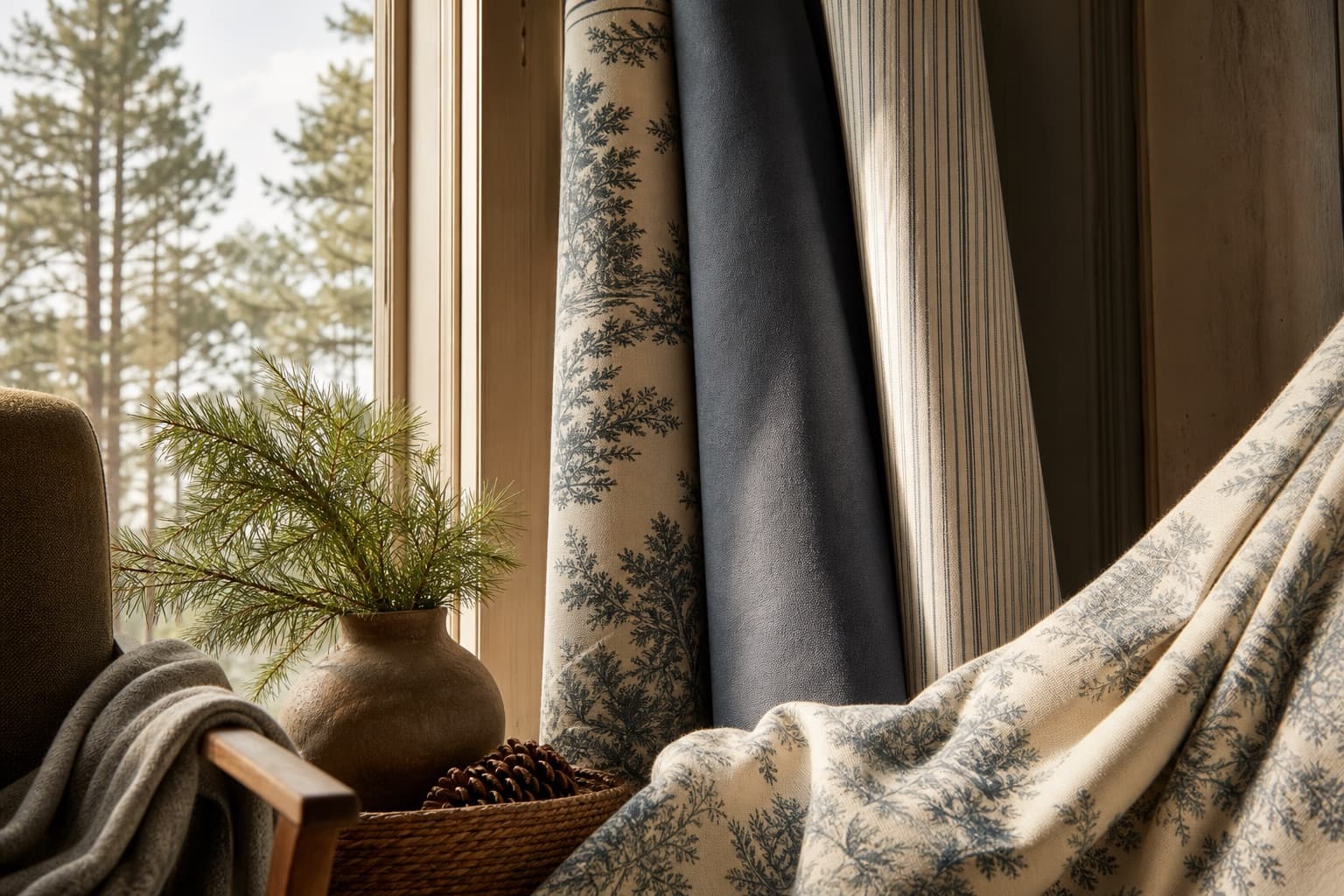
Spokane asks more of its home textiles than most cities do. A window treatment here has to earn its keep through genuinely cold winters, when single-digit nights make a heavy drape feel less like decoration and more like infrastructure. Then, almost without transition, the Inland Northwest tips into summer: sixteen-hour days, a sun that lingers past nine, and enough clear-sky UV to fade an unprotected cotton print in a couple of seasons. The fabrics that thrive in Craftsman bungalows on the South Hill and newer builds out toward Liberty Lake are the ones built for both extremes.
This guide ranks home décor fabrics — not stores, not brands — on four criteria that matter east of the Cascades: insulating value for cold months, light control for those long summer evenings, resistance to sun fading, and the kind of tactile warmth that makes a house feel right when the snow is stacking up outside. Weight, weave structure, and fiber content all factor in, and each pick notes where a fabric shines and where it asks for a compromise.
Whether the project is floor-length drapes for a drafty 1910 window, a slipcover that can survive dog hair and wood-stove season, or bedroom curtains dark enough to beat a 4:50 a.m. June sunrise, one of the ten fabrics below will do the job.
Blackout Fabric
Best for: Bedroom drapes, nursery curtains, and media rooms
In a city where midsummer light shows up before 5 a.m. and hangs around until nearly 9 p.m., true blackout fabric is the single most useful décor textile a Spokane household can own. Modern versions use tightly woven or foam-backed construction to block essentially all light while adding a meaningful layer of insulation at the window.
- ✓Solves the long-daylight problem that defines Inland Northwest summers, especially in bedrooms and nurseries
- ✓The dense construction doubles as thermal insulation, cutting drafts from older windows in winter
- ✓Works as a standalone drape or as a lining behind a decorative face fabric
- ✓The backing shields the face fabric from UV, so the room-side material fades far more slowly
Worth knowing: Coated blackout fabrics can feel stiff and plasticky on their own, so many sewists prefer to use them as a lining rather than the visible layer.
Cotton Velveteen
Best for: Winter-weight drapery and cozy accent upholstery
Velveteen delivers the deep-pile warmth of velvet in a sturdier, more forgiving cotton construction. As floor-length drapery it hangs in heavy, light-swallowing folds that insulate beautifully against a January cold snap, and as upholstery it gives a reading chair the kind of texture that makes wood-stove season something to look forward to.
- ✓The short, dense pile traps air, making it one of the most genuinely insulating drapery fabrics available
- ✓Substantial drape blocks light nearly as well as a dedicated blackout layer when lined
- ✓Cotton construction is more durable and easier to care for than silk or rayon velvets
- ✓Rich, matte-adjacent surface suits both Craftsman woodwork and modern interiors
Worth knowing: The pile crushes under prolonged pressure and shows marks, so it is a better fit for drapes and occasional chairs than for a family sofa.
Drapery Sateen
Best for: Formal and everyday drapery panels throughout the house
Drapery-weight sateen is the workhorse of custom window treatments: a satin-weave cotton or cotton-blend with a soft sheen, real body, and a beautiful hand. Lined and interlined, it makes the kind of full, structured drape that keeps a room feeling finished in February and filtered in July.
- ✓Heavier than quilting cottons, so panels hang straight and full without ballooning in a draft
- ✓The satin weave gives a subtle luster that catches low winter light nicely
- ✓Takes dye and printing well, offering the widest color and pattern range of any drapery class
- ✓Pairs perfectly with a blackout or thermal lining for a four-season window treatment
Worth knowing: Unlined sateen fades noticeably in strong sun, so a lining is close to mandatory on south- and west-facing Spokane windows.
Ticking Stripe
Best for: Pillow covers, café curtains, and casual slipcovers
The narrow woven stripe originally used for mattress and pillow covers has become a Northwest farmhouse staple, and for good reason. A tightly woven cotton twill ticking is durable, crisp, and casually handsome — equally at home as café curtains in a Perry District kitchen or as pillow covers on a lake-cabin porch.
- ✓Dense twill weave wears extremely well and resists dust and feather migration
- ✓Woven-in stripes cannot fade unevenly the way printed patterns can
- ✓Reads timeless rather than trendy, suiting farmhouse, cottage, and Craftsman interiors alike
- ✓Affordable and widely available, making it easy to use generously
Worth knowing: Its mid-range weight means ticking curtains filter rather than block light, so it is not the answer for a sun-blasted bedroom window.
Sheer Drapery
Best for: Layered window treatments and daylight-facing living spaces
Sheers are the counterweight to all that winter heft: gauzy voile- and batiste-class fabrics that let a room drink in daylight during the gray months while softening glare and adding daytime privacy. Layered behind heavier drapes, they let a Spokane window shift modes with the season.
- ✓Maximizes precious daylight from November through February without leaving windows bare
- ✓Diffuses harsh summer glare and screens views without blocking the light entirely
- ✓Polyester sheers resist sun degradation far better than fine natural-fiber sheers
- ✓Layers with blackout or velveteen panels for a two-stage, all-season window system
Worth knowing: Sheers offer essentially no insulation or nighttime privacy on their own, so they work best as one layer of a pair.
Toile de Jouy
Best for: Bedroom curtains, duvets, and traditional accent pieces
Toile is the classic single-color pastoral print on a light cotton ground, and it brings a storybook charm that suits Spokane's stock of early-1900s houses remarkably well. Used for curtains, bedding, or a papered-look accent wall of upholstered panels, it adds pattern without chaos because the entire scene runs in one hue.
- ✓One-color printing keeps busy scenic patterns calm and easy to coordinate
- ✓Traditionally printed on tightly woven cotton that sews and pleats cleanly
- ✓Suits the historic character of South Hill and Browne's Addition-era homes
- ✓Works at any scale, from a single lumbar pillow to full bedroom drapery
Worth knowing: As a printed rather than woven pattern, toile is vulnerable to sun fading and should be lined or kept off the hottest exposures.
Upholstery Chenille
Best for: Sofas, armchairs, and heavy winter throw pillows
Chenille's caterpillar-soft pile yarn makes it the tactile champion of upholstery fabrics, and modern décor chenilles are engineered for serious wear. On a sofa or oversized chair, it is the fabric equivalent of a wool blanket: exactly what a long Inland Northwest winter calls for.
- ✓Plush raised pile feels warm to the touch even in a chilly room
- ✓Contemporary poly-blend chenilles hold up to kids, dogs, and daily use
- ✓Textured surface hides pet hair, lint, and minor soil better than flat weaves
- ✓Substantial weight also makes it a candidate for heavy, insulating drapes
Worth knowing: Snag-prone pile means chenille and cats with claws are an uneasy pairing.
Décor Damask
Best for: Formal drapery, dining chairs, and heirloom-style pieces
Damask builds its pattern into the weave itself, with satin-weave figures shimmering against a matte ground in a single color. That structure is the point: the pattern can never peel, crack, or fade away, because it is the fabric. For formal drapes or a statement chair, it delivers old-world polish with real durability.
- ✓Woven-in pattern is inherently fade-proof in a way no printed fabric can match
- ✓Reversible construction offers two usable faces and forgiving wear
- ✓Substantial weight drapes formally and adds insulation at the window
- ✓Tone-on-tone patterning stays elegant under both low winter light and bright summer sun
Worth knowing: Long satin floats on the pattern face can snag, so damask rewards careful placement over high-traffic abuse.
Bouclé
Best for: Accent chairs, ottomans, and textural throw pillows
Bouclé's looped, nubby yarns create a surface that looks like fresh snowfall and feels like a sweater, which may explain why the fabric never seems to leave Northwest interiors for long. On an accent chair or ottoman it adds instant textural depth, and wool versions carry real insulating value.
- ✓Looped pile traps air, giving genuine warmth in wool and wool-blend versions
- ✓Irregular texture hides wear, soil, and seaming imperfections gracefully
- ✓The soft, matte surface complements wood, stone, and leather — the Inland Northwest material palette
- ✓Solid-color bouclés resist visible fading better than printed alternatives
Worth knowing: The loops that give bouclé its charm also catch on pet claws, rings, and zippers.
Cotton Barkcloth
Best for: Mid-century-style curtains, cushion covers, and retro accents
Barkcloth is the pebbly-textured, densely woven cotton that dominated mid-century American living rooms, and it is enjoying a genuine revival among vintage-house owners. Its rough, matte surface diffuses light softly, hides wear, and gives large-scale botanical prints a nostalgic depth no smooth fabric can imitate.
- ✓Dense, textured weave is heavier and more durable than typical printed cottons
- ✓Matte, irregular surface scatters light and disguises dust and minor fading
- ✓A natural match for Spokane's mid-century ranches and vintage bungalows
- ✓Heavy enough for unlined casual curtains, cushions, and light upholstery
Worth knowing: Vintage-style printed barkcloth still fades in direct sun, so keep bold prints lined or away from all-day southern exposure.
How to Choose
Match Fabric Weight to the Season You Fear Most
Drapery fabrics roughly divide into sheer (under about 100 GSM), medium (150–300 GSM), and heavy (300 GSM and up), and in Spokane the honest question is which season your room struggles with. Drafty older windows and cold-air pooling call for heavyweight fabrics — velveteen, chenille, damask — ideally interlined, because a dense drape can measurably slow heat loss at the glass. Rooms that overheat or over-brighten in summer need less mass and more light management: a medium-weight face fabric over a blackout lining gives control without bulk. When in doubt, buy the layered system rather than the single heroic fabric.
Weave Beats Print for Fade Resistance
The Inland Northwest averages far more clear-sky days than the west side of the state, and that sun is hard on textiles. Patterns woven into the cloth — damask, ticking stripe, dobby textures — degrade gracefully because the color runs through the yarn. Surface prints like toile and barkcloth florals sit on top of the fabric and fade first and fastest. Solution-dyed synthetics and woven patterns belong on south- and west-facing exposures; save beloved prints for shaded windows, or protect them with a lining and a leading edge you can accept some mellowing on.
Think in Layers, Not Single Panels
The most effective Spokane window treatment is usually two layers on a double rod: a sheer for daytime light and privacy, and a lined heavyweight drape for night, winter, and summer blackout duty. This system lets one window run four distinct modes across the year — open, filtered, insulated, and dark — which no single fabric can do. If a double rod is impossible, a blackout or thermal lining sewn or clipped behind the face fabric captures most of the benefit in one panel.
Be Honest About Care and Real Life
Wood-stove ash, muddy spring paws, and a long indoor season all find their way onto home textiles. Before committing yardage, check the care requirements: cotton ticking and barkcloth generally machine-wash, while velveteen, chenille, and damask usually want dry cleaning or careful spot treatment. For slipcovers and anything a dog will claim, prewash washable fabric before sewing so seams do not pucker later, and favor textured, mid-tone fabrics that forgive a season's worth of daily use between cleanings.
Frequently Asked Questions
What is the warmest fabric for curtains in a cold climate like Spokane's?
The warmest practical option is a layered construction: a heavyweight face fabric such as velveteen, chenille, or damask over a thermal or blackout lining, ideally with flannel interlining between them. The trapped air between layers does most of the insulating work. A single heavy fabric helps, but the lining is what turns a drape into genuine draft protection.
Do I really need blackout fabric for summer here?
If anyone in the house is sensitive to light while sleeping, yes. Around the summer solstice, Spokane sees usable daylight from roughly 4:30 a.m. to well past 9 p.m., which ordinary curtains only dim. A blackout layer — either as the drape itself or as a lining — is the difference between a dark bedroom and a glowing one.
How do I keep my curtains from fading?
Line them, and choose woven patterns over prints for the sunniest exposures. A basic cotton or blackout lining absorbs the UV that would otherwise attack the face fabric, often doubling its visual lifespan. Rotating panels seasonally and keeping prized printed fabrics off south- and west-facing windows also helps.
Which upholstery fabric holds up best with pets?
Tightly woven, textured fabrics without long loops are the safest bet — a dense chenille or woven jacquard hides hair and wear well, while bouclé's loops are vulnerable to claws. Mid-tone colors and small-scale texture disguise the daily evidence. Whatever the fabric, look for upholstery-grade goods rather than lighter drapery cloth for anything a dog or cat will live on.
Is toile too formal for a Northwest home?
Not at all — toile reads traditional rather than formal, and its single-color scenes pair surprisingly well with the wood tones and painted trim of older Spokane houses. Used in moderation, a toile in slate, forest green, or faded red feels more storybook cottage than French château. The key is restraint: one room, one colorway, and plenty of solid fabrics around it.