Idaho
The Best Upholstery Fabrics in Idaho
By Sage McKenzie, Pacific Northwest Textile Writer · June 23, 2026
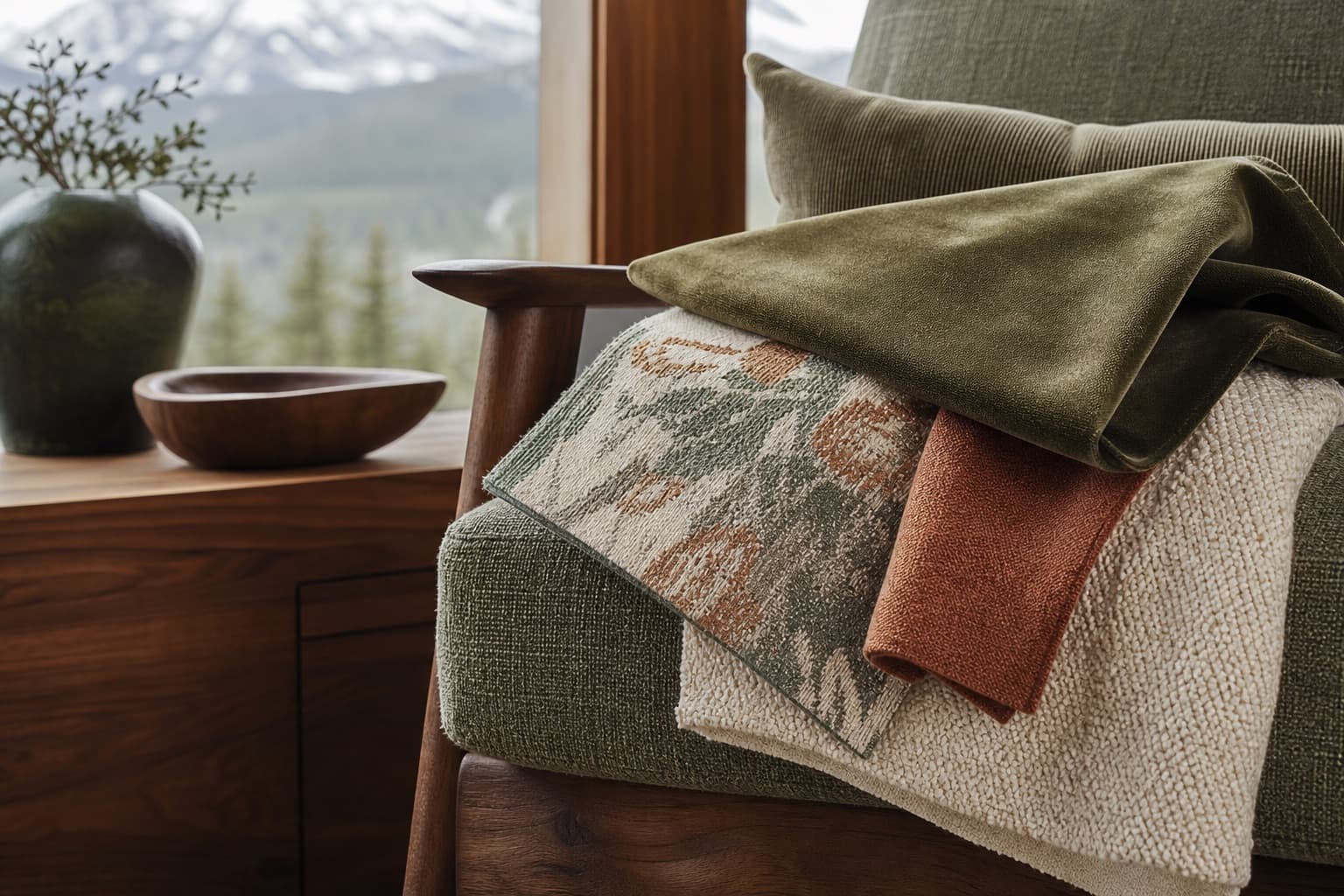
Idaho asks a lot of a sofa. A living room in the Boise foothills gets blasted with high-desert sun through big south-facing glass for most of the year, while a cabin near McCall or up in the Sawtooths swings from woodstove-dry winters to muddy spring boot season. Add a heeler who thinks the sectional is base camp and a ski-season parade of guests, and the fabric on your furniture matters far more than it would in a milder, cloudier place.
This guide ranks upholstery fabric types, not stores or brands, on the things that actually decide how a piece ages here: abrasion resistance (the rub counts listed on upholstery-grade goods), how well the fiber and dye stand up to intense sun near windows, how the surface handles pet claws and hair, whether the look belongs in a timber-and-stone interior, and one quirk outsiders never think about, static. When indoor humidity drops into the basement every January, some synthetics turn into crackling, hair-magnet nightmares while others shrug it off.
Every pick below is a category of cloth you can ask for by name at any fabric counter or workroom. Where a fabric lives in our database, we link straight to its full profile so you can dig into construction, fiber content, and care before you commit to forty yards of anything.
Upholstery-Weight Chenille
Best for: Everyday family sofas and sectionals
Chenille woven at true upholstery weight is the workhorse of Idaho family rooms. Its plush, caterpillar-yarn pile feels warm on a below-zero night, hides everyday soil in its texture, and modern versions routinely carry rub counts high enough for daily-use sofas.
- ✓Dense pile texture disguises pet hair, crumbs, and light soil between cleanings
- ✓Soft, warm hand that suits long winters and woodstove living rooms
- ✓Upholstery-grade versions are built for heavy daily abrasion
- ✓Available in earthy, lodge-friendly solids and subtle heathered tones
Worth knowing: Cats can snag the looped pile, so households with dedicated scratchers should test a sample first.
Performance Microsuede
Best for: Pet-heavy households and high-traffic rooms
Microsuede is a tightly constructed microfiber with a brushed, suede-like face and almost nothing for a claw to catch. It wipes clean, resists moisture, and takes years of dog traffic without showing it, which is why it dominates mudroom-adjacent furniture across the state.
- ✓Nearly snag-proof flat surface stands up to dogs, kids, and gear
- ✓Most spills bead up long enough to blot away before they soak in
- ✓Excellent abrasion resistance at a friendly price point
- ✓Gives a suede look without the sun-fade and scuff worries of real hide
Worth knowing: In a dry Idaho January it can build static and cling to pet hair, so plan on a humidifier or an anti-static spray.
Upholstery Jacquard
Best for: Statement chairs and great-room seating
Jacquard weaves their pattern directly into the cloth rather than printing it on top, so the design cannot wear or wash off. Woven-in elk, pine, and geometric lodge motifs make it the signature fabric of Idaho great rooms, and the dense multi-yarn structure is inherently durable.
- ✓Woven-in patterns keep their depth even as the surface wears
- ✓Complex yarn interlacings give real structural durability
- ✓Patterns camouflage wear, soil, and the occasional paw print
- ✓The classic choice for lodge, cabin, and mountain-modern interiors
Worth knowing: Long floats in some patterns can snag, so choose tighter, smaller-scale designs for busy households.
Wool Boucle
Best for: Accent chairs and reading nooks
Boucle is woven from looped, nubby yarns that give it a deep, cozy texture, and in wool or wool-blend form it is one of the most Idaho-appropriate fabrics there is. Wool is naturally flame-resistant, insulating, and remarkably good at not holding static in dry air.
- ✓Wool fiber resists static buildup during bone-dry winters
- ✓Irregular looped texture hides wear, soil, and pilling gracefully
- ✓Naturally insulating and warm to the touch in cold rooms
- ✓Reads as high-end mountain-modern without trying hard
Worth knowing: Those signature loops are a standing invitation to cat claws and dog toenails.
Velveteen
Best for: Formal dens, benches, and low-traffic luxury pieces
Velveteen delivers the deep, light-catching richness of velvet in a shorter, denser cotton pile that is far more practical for furniture. It brings genuine luxury to a den or bedroom bench, and its matte-leaning pile is more forgiving of crush marks than silky velvets.
- ✓Short, dense pile is more crush- and wear-resistant than long-pile velvet
- ✓Rich color depth that glows beautifully in low winter light
- ✓Cotton base takes deep, saturated dyes suited to jewel and forest tones
- ✓Warm hand that makes cold-weather rooms feel finished
Worth knowing: Direct high-desert sun will fade rich pile colors faster than most flat weaves, so keep it back from big unshaded windows.
Mohair Pile
Best for: Heirloom pieces meant to last generations
Mohair upholstery, woven from lustrous Angora goat fiber, is the fabric of heirloom furniture, the stuff still covering theater seats after decades of use. It is astonishingly durable for a pile fabric, naturally resilient, and its sheen flatters timber interiors.
- ✓Among the most durable natural pile fabrics ever made for seating
- ✓Springy fiber resists crushing and recovers from compression
- ✓Naturally soil-shedding and flame-resistant like other animal fibers
- ✓Ages into a patina rather than simply wearing out
Worth knowing: It sits at the top of the price range for upholstery yardage, so it rewards patient, buy-once thinking.
Cotton Duck and Drill
Best for: Washable slipcovers and casual cabin seating
Heavy, tightly woven cotton in duck and drill weights is the honest, hard-wearing choice for slipcovers, window seats, and casual cabin furniture. It machine-washes, takes a beating, and its plainspoken look fits the ranch-house end of Idaho style perfectly.
- ✓Heavy plain and twill constructions shrug off years of abrasion
- ✓Slipcovers made from it can go straight into the washing machine
- ✓Cotton stays static-free through the driest winter weeks
- ✓Affordable enough to recover pieces on a real-world budget
Worth knowing: Untreated cotton absorbs spills quickly, so a stain-repellent finish is worth adding for dining and family rooms.
Woven Tapestry
Best for: Ottomans, benches, and themed lodge pieces
Tapestry fabric is a heavyweight, densely woven cloth with pictorial or large-scale patterns built into the weave itself. On ottomans, benches, and lodge chairs it delivers the storytelling look, pines, wildlife, Fair Isle geometry, that defines mountain interiors.
- ✓Very heavy, multi-layered weave built for hard use
- ✓Large woven scenes and motifs made for cabin and lodge decor
- ✓Busy patterns hide soil and wear better than nearly anything
- ✓Substantial body that upholsters cleanly over firm cushions
Worth knowing: Its stiffness and weight make it a poor match for deeply tufted or tightly curved frames.
Herringbone Wool Blends
Best for: Tailored sofas and office or den chairs
A herringbone-woven wool blend brings quiet, tailored texture to furniture the way it does to a good winter coat. The broken twill structure is tight and durable, and the two-tone zigzag hides dog hair and daily wear while looking sharp against log and stone.
- ✓Tight broken-twill weave wears slowly and evenly
- ✓Two-tone pattern masks pet hair, lint, and light soil
- ✓Wool content keeps static down and warmth up in dry cold
- ✓Timeless menswear look that suits mountain-modern rooms
Worth knowing: Pure wool versions need prompt attention to spills, since heat and agitation can felt the fiber.
How to Choose
Read the Rub Count Before You Fall in Love
Upholstery fabric is graded by abrasion testing, usually reported as double rubs (Wyzenbeek) or cycles (Martindale). As a rule of thumb, everyday family furniture deserves fabric rated for heavy-duty residential use, while occasional chairs can get away with lighter grades. A gorgeous cloth with a low rating belongs on a guest-room bench, not the sectional where the whole household lands every evening. Ask for the rating on the sample card; reputable suppliers always publish it.
Plan for Idaho Sun
High elevation and dry, clear skies mean the UV coming through a picture window in Idaho is stronger than the same exposure in a cloudier climate. Solution-dyed synthetics and pale, greyed-down colors fade the slowest; saturated cotton piles and bright prints fade fastest. If a piece will live within a few feet of big glass, favor fade-resistant fibers, add sheers or UV window film, and rotate cushions a quarter turn every month so wear and fade stay even.
Match the Fiber to Your Winter Air
Once the woodstove or furnace runs full-time, indoor humidity can drop low enough to turn some fabrics into static generators. Wool and cotton are naturally resistant; polyester, nylon, and acrylic are the usual offenders, though tightly brushed constructions behave better than slick ones. If you love a synthetic performance weave, pair it with a humidifier in the main living space, and you get the stain resistance without the crackle and the clinging dog hair.
Weight, Weave, and Care
Heavier cloth, roughly 300 GSM and up, upholsters better and lasts longer on seating than lightweight goods, and tight weaves outlast loose, loopy ones in homes with pets. Check the cleaning code before buying: W means water-based cleaners, S means solvent only, WS means either, and X means vacuum-only. For a house with kids, dogs, or ski-weekend guests, W or WS codes and a zip-off or slipcovered construction will save you real grief over the life of the piece.
Frequently Asked Questions
What rub count do I actually need for a family sofa?
For a sofa that gets daily use, look for fabric marketed as heavy-duty residential grade, which generally means a substantially higher double-rub rating than decorative-grade goods. Occasional chairs and headboards can use lighter fabric because they see so little abrasion. When in doubt, buy one grade tougher than you think you need; the price difference is small compared to reupholstering.
Which upholstery fabrics fade least in strong mountain sun?
Solution-dyed synthetics resist fading best because the color runs all the way through the fiber instead of sitting on its surface. Among natural-look options, lighter and greyer colors show fade far less than saturated brights or deep piles. Whatever you choose, sheer curtains, UV window film, and regular cushion rotation dramatically slow visible fading near big windows.
What is the best upholstery fabric for a house with dogs?
Tight, flat, snag-free surfaces win: microsuede and dense, tightly woven chenilles and twills handle claws and hair better than loopy or long-pile cloth. Choose colors and textures that echo your dog, a heathered grey for a grey dog hides a lot of hair. Avoid open-loop boucles and loose tapestry floats if your animals are rough on furniture.
Why does my couch shock me every winter, and can fabric fix it?
Cold-season heating drives indoor humidity very low, and dry air lets static charge build on synthetic fibers as you slide across them. Wool, cotton, and other natural fibers hold and release moisture, so they rarely shock; slick polyester and nylon are the usual culprits. A humidifier in the main living area is the most effective fix, with anti-static sprays as a stopgap.
Is velvet a realistic choice for a cabin or lodge interior?
Yes, if you choose the right kind and the right spot. Short, dense piles like velveteen and mohair wear far better than long silky velvets, and mohair in particular is famously durable. Keep pile fabrics off the sunniest wall and away from the main dog-landing zone, and they bring a warmth to timber rooms that flat weaves cannot match.