Oregon
The Best Wool Fabrics in Oregon
By Sage McKenzie, Pacific Northwest Textile Writer · June 4, 2026
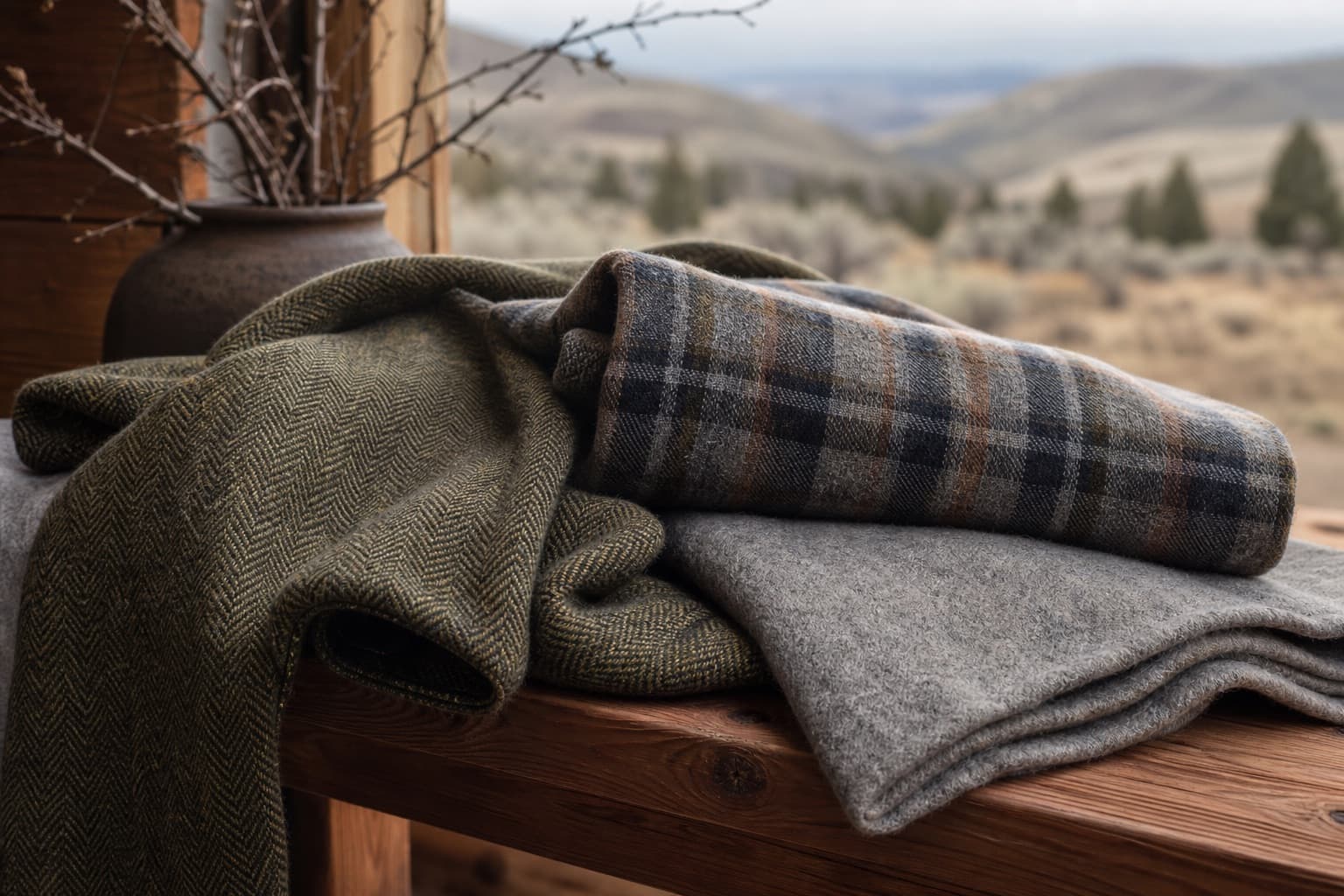
Oregon asks a lot of a fabric. West of the Cascades, winter arrives as a five-month drizzle that never quite commits to rain, and the chill is the damp kind that settles into your bones on a November walk along the Willamette. Cross the mountains and the rules flip: high desert sun, cold dry nights, and wind that scours the sagebrush flats around Bend. A single wardrobe has to answer to both, and no fiber does that better than wool. It insulates when wet, breathes when the sun breaks through, shrugs off drizzle, and resists the mildew and odor that plague synthetics and cotton in a maritime climate.
Wool is also woven into the state's history. Oregon's valleys and rangelands have supported sheep since the wagon-train era, and the mills that grew up along its rivers helped clothe the West in blankets, shirting, and coating wool. That heritage still shapes local taste: Oregonians reach for hardwearing, unfussy cloth that looks at home at a farmers market, a trailhead, or a Portland coffee shop, often all in the same afternoon.
For this guide we ranked wool fabrics, not stores or brands, on four criteria: performance in damp maritime cold, versatility across the wet valleys and the dry east side, ease of sewing and care for home stitchers, and how well each cloth suits the layered, outdoorsy way people actually dress here. Here are the wools that earn their keep in Oregon.
Melton
Best for: Winter overcoats and peacoats for the wet valley months
Melton is a densely woven, heavily fulled coating wool with a smooth, felted face that laughs at Oregon drizzle. The tight nap sheds light rain and blocks wind outright, which is why it has been the default cloth for serious winter coats for well over a century.
- ✓The fulled, brushed surface sheds drizzle and mist for hours before moisture reaches the interior
- ✓Nearly windproof without any laminate or membrane, ideal for gorge winds and coastal headlands
- ✓Cut edges barely fray, so home sewists can finish coats with minimal seam treatment
- ✓Dense structure gives coats a clean, tailored drape that holds up to daily wear
Worth knowing: Its weight and density can overwhelm home sewing machines, so plan on a heavy needle, longer stitches, and plenty of pressing.
Wool Flannel
Best for: Trousers, blazers, and shirt-jackets for town and office
Soft, napped, and quietly warm, wool flannel is the cloth of gray Portland skies. It drapes beautifully in trousers, blazers, and shirt-jackets, and its brushed surface traps a layer of still air that takes the edge off damp forty-degree days.
- ✓The napped face insulates well at a moderate weight, perfect for the valley's mild but clammy winters
- ✓Matte, muted surface suits the understated Pacific Northwest palette of grays, mosses, and heathers
- ✓Drapes and tailors more forgivingly than crisp worsteds, flattering in trousers and unstructured jackets
- ✓Comfortable across a wide temperature range, so one garment covers October through April
Worth knowing: The soft nap can pill and wear shiny at friction points like elbows and seat, so reserve it for garments that see moderate rather than brutal use.
Donegal-Style Tweed
Best for: Sport coats, vests, and caps with rustic character
Tweed flecked with contrasting slubs of color looks like it was designed with a fir forest in mind. Beyond the aesthetics, its woolen-spun yarns and firm twill weave make a rugged, weather-resistant cloth that has kept people warm in wet, green landscapes for generations.
- ✓Woolen-spun yarns trap air for real warmth without excessive weight
- ✓Flecked, heathered coloring hides trail dust, coffee drips, and dog hair between cleanings
- ✓Firm hand and natural lanolin content resist light rain and damp air
- ✓Ages gracefully, softening and molding to the wearer over years of use
Worth knowing: The textured surface can feel scratchy against bare skin, so most tweed garments want a lining or a layer underneath.
Boiled Wool
Best for: Unstructured jackets, vests, and slippers
Boiled wool starts life as a knit, then gets agitated in hot water until it shrinks into a dense, felted cloth with a little stretch left in it. The result is a fabric that moves like a cardigan but blocks wind and drizzle like a coat, a combination tailor-made for Oregon layering.
- ✓Retains gentle knit stretch, so jackets move easily over sweaters and flannel shirts
- ✓Felted surface resists wind and sheds light rain without any coating
- ✓Edges do not fray, allowing simple raw-edge finishes and quick projects
- ✓Lighter and less stiff than coating meltons while still genuinely warm
Worth knowing: It has already been aggressively shrunk once, but careless hot washing can still shrink and stiffen it further, so hand wash or dry clean.
Wool Gabardine
Best for: Rain-ready trousers, skirts, and trench-style coats
Gabardine is a tightly woven worsted twill with a steep diagonal rib and a natural talent for shedding water, originally developed as rainwear cloth. In a state where the forecast is a shrug, it makes trousers and trench-style coats that ignore a surprise shower.
- ✓The steep, dense twill sheds rain better than almost any other uncoated wool weave
- ✓Smooth worsted surface resists wrinkles through a full day of commuting and meetings
- ✓Hardwearing enough for daily trousers yet polished enough for formal settings
- ✓Breathes far better than coated synthetic rainwear on mild, muggy days
Worth knowing: Its tight weave makes seam ripping risky and pressing unforgiving, since needle holes and shine marks tend to be permanent.
Merino Jersey
Best for: Base layers, tees, and hiking socks year-round
Fine merino knit into a soft single jersey is the base-layer champion of the Cascades. It wicks moisture, insulates even when sweat-damp, and resists odor so well that a shirt can go from a Saturday summit to a Sunday brunch without complaint.
- ✓Regulates temperature across the wild swings of a single Oregon day, from foggy trailhead to sunny ridge
- ✓Naturally odor-resistant, ideal for multi-day trips and minimalist travel wardrobes
- ✓Fine fibers feel smooth against skin, with none of the itch of coarser wools
- ✓Drapes and sews like any light knit, opening wool up to t-shirts, dresses, and base layers
Worth knowing: Fine merino knits are delicate, prone to snags and thin spots at high-wear points like shoulders under pack straps.
Loden
Best for: Long walking coats and capes for wet-weather hikers
Loden is an alpine coating cloth, woven loosely from sturdy wool and then fulled and brushed until it becomes thick, supple, and remarkably water-resistant. Cloth developed for centuries of mountain weather transfers to the Cascades and the coast range without missing a beat.
- ✓Traditional fulling and napping process yields outstanding resistance to prolonged drizzle
- ✓Softer and more supple than melton at comparable warmth, so long coats swing rather than stand stiff
- ✓Classic deep greens and grays look at home against Douglas fir and basalt
- ✓Durable enough to become a decades-long companion rather than a seasonal purchase
Worth knowing: True loden-style cloth is a specialty item that usually must be mail-ordered, and its bulk calls for simple coat patterns.
Herringbone Wool
Best for: Blazers, chore coats, and winter skirts
The broken zigzag of herringbone twill adds visual depth to wool without shouting, and the weave itself is dense and durable. It is the quiet workhorse of Northwest tailoring, equally convincing in a structured blazer or a rugged chore coat.
- ✓The reversing twill structure is exceptionally strong and abrasion-resistant
- ✓Subtle pattern adds interest to solid-colored wardrobes without limiting versatility
- ✓Available across weights, from shirting-light to full coating cloth
- ✓Reads as both classic and current, dodging trend cycles entirely
Worth knowing: The directional pattern demands careful matching at center seams and pockets, which adds cutting time and fabric waste.
Shetland-Style Tweed
Best for: Spring and fall sport coats and overshirts
Lighter and loftier than most tweeds, Shetland-style cloth is woven from springy, crimpy wool that traps warmth without bulk. It suits the shoulder seasons that make up half the Oregon calendar, when a heavy coat is too much and a rain shell is too clammy.
- ✓Lofty, resilient yarns insulate well at a lighter weight than coating tweeds
- ✓Slightly open weave breathes on damp days in the fifties, the classic valley forecast
- ✓Heathered colorways pair naturally with denim, canvas, and flannel
- ✓Forgiving to sew and press, a good first tweed for newer garment makers
Worth knowing: Its looser weave snags more easily than dense meltons and gabardines, so it is better for town and trail edges than for bushwhacking.
How to Choose
Match the Weight to Your Side of the Cascades
Fabric weight, usually quoted in grams per square meter or ounces per yard, is the first filter. For the mild, wet west side, midweight cloths around suiting and jacketing weight handle most of the year, with true coating weights like melton and loden reserved for December through February. East of the mountains, dry cold and wind reward denser, heavier weaves for outerwear, while big day-to-night temperature swings make breathable midweights and merino knits the smarter choice for everything worn underneath.
Read the Weave Before You Buy
Construction tells you how a wool will behave in the rain. Tightly woven twills like gabardine shed water and wind but breathe less; fulled cloths like melton, loden, and boiled wool blend wind resistance with a soft hand; open woolens like Shetland tweed trade some weather resistance for loft and breathability. Hold the fabric up to the light: the less light passes through, the more weather it will stop. For a Willamette Valley winter coat, choose cloth you cannot see through.
Plan for Care Realistically
Most structured wools, including melton, gabardine, and tweed, want dry cleaning or careful spot cleaning, but they need it far less often than cotton needs washing. Airing a wool garment overnight removes most odors, and a brush handles surface dirt. Knits like merino jersey usually tolerate gentle machine washing cold with a wool-safe detergent, laid flat to dry. Whatever the cloth, keep it away from hot dryers, and store clean woolens with cedar or lavender through the summer to discourage moths.
Think in Layers, Not Single Garments
Oregon weather rarely justifies one heroic garment; it rewards a system. A merino base layer, a flannel or Shetland midlayer, and a melton or loden outer layer will cover a foggy coast morning, a drizzly valley afternoon, and a cold high-desert evening with the same wardrobe. When choosing fabric for a project, ask where it sits in that stack: next-to-skin cloth should be fine and washable, midlayers lofty and breathable, and outer layers dense and weather-shedding.
Frequently Asked Questions
Is wool actually good in Oregon rain, or do I still need a rain shell?
Wool handles the state's signature drizzle and mist remarkably well because the fiber absorbs a great deal of moisture before feeling wet and keeps insulating even when damp. Dense, fulled cloths like melton and loden will shrug off hours of light rain. For a genuine downpour or a long day of steady coastal rain, though, a waterproof shell over your wool is still the right call.
Which wool fabric should a beginning sewist in Oregon start with?
Boiled wool and midweight tweed are the friendliest entry points. Boiled wool does not fray, forgives imperfect seams, and turns into a wearable jacket quickly, while tweed's textured surface hides uneven stitching. Save gabardine for later, since its tight weave shows every needle hole, and work up to heavy meltons once your machine and pressing skills are ready.
How do I keep moths out of my wool during a Willamette Valley summer?
Clean everything before storage, because moths are drawn to body oils and food traces more than to the wool itself. Store garments in sealed bins or garment bags with cedar blocks or lavender sachets, and check them once or twice over the summer. The valley's mild, humid summers are comfortable for insects, so airtight storage matters more here than in drier climates.
Does Oregon's wool heritage mean I can buy locally grown and milled fabric?
Sheep have grazed Oregon's valleys and rangelands since the mid-1800s, and mills along its rivers were once major producers of blankets and coating wool. Some regional mills and small fiber producers still operate, and fiber festivals and farm networks around the state are good ways to find locally grown wool. Availability varies year to year, so treat local cloth as a happy find rather than a guaranteed supply.
Is merino jersey warm enough for winter hiking in the Cascades?
On its own, no; merino jersey is a base layer, not insulation for freezing summits. Its job is to move sweat off your skin and keep insulating while damp, which it does better than nearly any other fiber. Pair it with a lofty midlayer and a windproof or waterproof shell, and it becomes the foundation of a winter system rather than the whole answer.