Willamette Valley, Oregon
Top Linen Fabrics in the Willamette Valley
By Sage McKenzie, Pacific Northwest Textile Writer · July 1, 2026
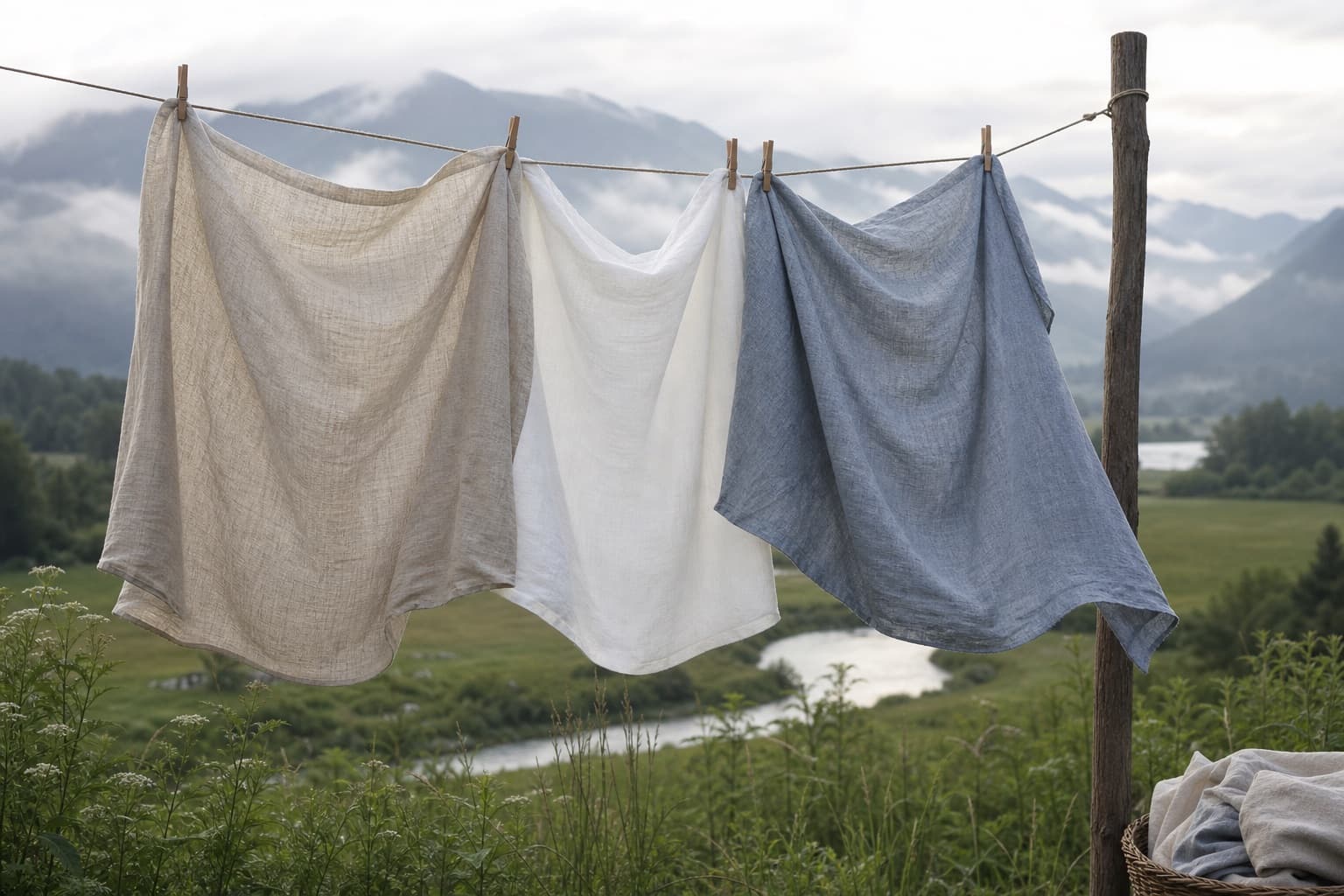
Linen belongs in the Willamette Valley the way filberts and pinot vines do. The valley was once a genuine flax-growing region: fields of blue-flowered flax stretched across the bottomlands, and mills near Salem retted, scutched, and spun the fiber into thread and cloth before the industry faded in the mid-twentieth century. That history still lingers in place names, museum exhibits, and the quiet conviction among local sewists that linen simply makes sense here.
It does. The valley climate swings from drizzle-gray winters to bone-dry July afternoons that push past what any polyester shirt can politely handle. Linen breathes through the heat, layers comfortably under wool when the rain returns, and softens with every wash into something you reach for first. It also wrinkles, sheds, and drapes differently depending on its weight and weave, which is exactly why not every linen suits every project.
This guide ranks the linen and linen-blend fabrics best suited to valley living, judged on four criteria: weight (how the cloth suits the season and the project), softness (both off the bolt and after laundering), wrinkle character (whether the creases read as charm or chaos), and breathability (the reason to choose linen in the first place). Fabric types, not stores or brands, are what is ranked here.
Mid-Weight Garment Linen
Best for: Everyday garments and warm-season sewing
The 170 to 200 GSM plain-weave linen that most people picture when they picture linen. It has enough body for pants, button-ups, and shift dresses, yet stays breathable through a 95-degree Salem afternoon. After three or four washes it relaxes into the softest thing in the closet.
- ✓Versatile weight that works for shirts, dresses, and lighter pants alike
- ✓Excellent airflow for the valley’s hot, dry summer stretches
- ✓Wrinkles fall in soft, lived-in folds rather than sharp creases
- ✓Gets noticeably softer and drapier with every laundering
Worth knowing: Fresh off the bolt it can feel crisp to the point of stiff, so plan on a few wash cycles before it earns its reputation for comfort.
Handkerchief Linen
Best for: Sheer summer garments and heirloom sewing
The featherweight of the linen family, sheer enough to see light through and cool enough to wear through August without complaint. It is the classic choice for heirloom blouses, summer scarves, and airy curtain panels. In the valley it earns its keep from June to September.
- ✓The most breathable option in this guide, ideal for peak summer heat
- ✓Beautiful, floaty drape for blouses, camisoles, and lightweight layers
- ✓Fine, tight yarns give it a surprisingly smooth, soft hand
Worth knowing: It wrinkles enthusiastically and offers little opacity, so most garments need a lining, a layer, or a relaxed attitude.
Linen-Cotton Twill
Best for: Trousers, chore coats, and structured casualwear
A diagonal-weave blend that pairs linen’s coolness with cotton’s forgiving nature. The twill structure adds durability and a subtle surface texture, and the cotton content tames the wrinkles considerably. It is the sensible bridge fabric for anyone who loves linen but works an office job.
- ✓Twill weave resists abrasion, making it strong enough for pants and jackets
- ✓Cotton content softens the hand and calms the wrinkle character
- ✓Still breathes well enough for shoulder-season layering in the valley
- ✓Easier to press and sew than pure linen, friendly to newer sewists
Worth knowing: The cotton share means it dries more slowly than pure linen after a surprise valley shower.
Heavy Upholstery Linen
Best for: Upholstery, slipcovers, and heavy home projects
Dense, canvas-like linen woven for furniture, slipcovers, and hard-wearing bags. Its natural slubs and matte finish suit the valley’s farmhouse-modern interiors, and the fiber’s inherent strength means a well-made linen sofa cover outlasts most of what sits on it. This is the weight the old Salem mills would have recognized as workhorse cloth.
- ✓Exceptional tensile strength for upholstery, cushions, and tote bags
- ✓Textured, natural surface that fits Pacific Northwest interior style
- ✓Breathable seating fabric that stays cool against skin in summer
Worth knowing: Its stiffness and thickness demand a heavy-duty needle and a sewing machine with some backbone.
Linen Herringbone
Best for: Unstructured blazers and refined casual pieces
Linen woven in the classic zigzag herringbone pattern, which adds visual depth and a touch of structure without extra weight. It reads dressier than plain-weave linen while keeping every bit of the breathability. For a valley wardrobe that moves between tasting rooms and trailheads, it is a quiet upgrade.
- ✓Herringbone texture disguises wrinkles better than a flat weave
- ✓Broken-twill structure adds durability and gentle drape
- ✓Elevated look for blazers, vests, and dressier shirting
Worth knowing: The patterned weave shows needle holes if seams are unpicked, so measure twice before committing.
Linen Tropical Suiting
Best for: Summer suits, blazers, and event wear
A smooth, open-weave suiting built for hot weather, traditionally woven from wool, linen, or blends of the two. The linen versions make the coolest tailored clothing available, perfect for summer weddings in vineyard country. It holds a press better than garment linen while still moving air.
- ✓The most breathable route to genuinely tailored clothing
- ✓Open weave vents heat during long outdoor events
- ✓Crisper finish and better crease retention than standard dress linen
Worth knowing: It is dry-clean-leaning and needs careful pressing, which makes it more maintenance than the rest of this list.
Linen-Rayon Blend
Best for: Drapey dresses and flowing warm-weather garments
Blending rayon into linen trades some of the crispness for a fluid, swishy drape that pure linen cannot match. Dresses and wide-leg pants cut from it move beautifully and wrinkle far less. It is the linen for people who want the look without the rumple.
- ✓Fluid drape that flatters dresses, skirts, and flowing pants
- ✓Noticeably fewer and softer wrinkles than pure linen
- ✓Softer hand straight off the bolt, no break-in period required
Worth knowing: Rayon weakens when wet, so these blends need gentler laundering than sturdy all-linen cloth.
Linen Damask
Best for: Tablecloths, napkins, and heirloom household linens
The heirloom weave: reversible jacquard patterns woven into fine linen, the traditional cloth of formal tablecloths and napkins. Its subtle sheen comes from the weave itself, not a finish, and it launders beautifully for decades. For holiday tables in a valley farmhouse, nothing else feels quite as right.
- ✓Woven-in patterns that survive generations of washing and ironing
- ✓Elegant tone-on-tone sheen without any synthetic coating
- ✓Absorbent and lint-free, the historic standard for fine table linens
Worth knowing: It demands ironing to look its best, and the fine jacquard weave commands a higher cost per yard.
Huckaback Linen
Best for: Kitchen towels, hand towels, and spa textiles
A honeycomb-textured weave traditionally used for towels, and one of the most practical linens a household can own. The dimpled surface multiplies absorbency and dries fast even through a damp valley winter. Huck towels also famously improve with age, growing softer and thirstier for years.
- ✓Textured weave absorbs quickly and releases moisture just as fast
- ✓Dries rapidly indoors, a real virtue from November through March
- ✓Nearly indestructible in daily kitchen and bath use
Worth knowing: Its utilitarian texture keeps it in the towel-and-toweling lane rather than garment sewing.
Sheer Linen Drapery
Best for: Curtain panels and light-filtering window treatments
Open-weave, gauzy linen made for windows, where it filters the valley’s soft gray light into something warm and diffuse. Sheer drapery cloth is often synthetic, but the linen versions bring natural slubs and texture no polyester sheer can fake. On a bright day the shadows it casts are half the decor.
- ✓Diffuses overcast Northwest light into a warm, flattering glow
- ✓Natural slub texture adds character that flat synthetic sheers lack
- ✓Airy weave keeps rooms ventilated through summer heat
Worth knowing: Loose weaves can stretch and grow over time, so hemming after the panels have hung for a week is wise.
How to Choose
Match the Weight to the Project
Linen is sold across a wide weight range, and grams per square meter (GSM) is the most reliable guide. Roughly speaking, handkerchief linens sit below about 140 GSM and suit blouses, sheers, and heirloom work; mid-weights from about 160 to 220 GSM cover most garments; and anything past 250 GSM heads toward canvas, slipcovers, and upholstery. When shopping in person, hold the cloth up to the light and let it hang over your hand. If it collapses softly, it wants to be a dress; if it stands away from your palm, it wants to be a jacket or a chair.
Read the Weave, Not Just the Label
Two linens of identical weight can behave completely differently depending on construction. Plain weaves are crisp and breathable but wrinkle the most. Twills and herringbones drape more fluidly and hide creases in their texture. Jacquard weaves like damask add pattern and sheen at the cost of easier snagging. Loose, open weaves breathe best of all but can shift and stretch, which matters for anything fitted. For valley summers, prioritize open, airy constructions; for year-round pieces, a twill or herringbone earns its keep.
Plan for Care and the Break-In Period
Pure linen almost always benefits from pre-washing, both to remove sizing and to trigger the softening that makes the fiber famous. Expect meaningful shrinkage on the first hot wash, so buy extra yardage and pre-shrink before cutting. Line-drying is gentle and works well in the dry valley summer, though a short tumble on low softens the hand. Blends change the rules: cotton content makes laundering more forgiving, while rayon content calls for cooler water and a gentler cycle.
Think in Seasons, Not Just Sunshine
Linen has a reputation as a summer-only fiber, but in a climate with mild, wet winters it works nearly year-round. Mid-weight and heavy linens layer well under wool and flannel, and the fiber’s quick moisture release keeps it comfortable in damp air where cotton lingers clammy. Reserve the sheerest weights for the hot months, then lean on twill-weave and heavier linens as the rain sets in. A linen wardrobe built across two or three weights covers the whole Willamette Valley calendar.
Frequently Asked Questions
Did flax really grow in the Willamette Valley?
Yes. The valley supported a working flax industry for decades, with fiber flax grown in its fields and processed at mills in and around Salem before the industry declined in the mid-twentieth century. The region’s mild, moist growing season suited the crop well. That heritage is part of why linen still feels like a natural fit for Oregon makers.
How do I keep linen from wrinkling so much?
You mostly manage wrinkles rather than eliminate them. Choosing a blend with cotton or rayon, picking a twill or herringbone weave, and hanging garments promptly out of the dryer all reduce creasing significantly. A steamer or a hot iron with plenty of steam handles the rest. Many linen lovers simply accept soft rumpling as part of the fabric’s character.
Is linen worth wearing during the rainy season?
Heavier linens are, especially layered under wool or a rain shell. Linen absorbs moisture readily but also releases it quickly, so it avoids the clammy feeling cotton can develop in damp Northwest air. Save the handkerchief weights for summer and reach for mid-weight and twill linens once the drizzle returns.
What is the difference between linen-cotton and linen-rayon blends?
Linen-cotton blends keep a dry, matte, sturdy character and are easier to sew and launder, making them ideal for structured garments and everyday pieces. Linen-rayon blends trade crispness for a fluid, swingy drape with fewer wrinkles, which flatters dresses and loose pants. Choose cotton blends for durability and rayon blends for movement.
Should I pre-wash linen before sewing with it?
Always. Linen shrinks noticeably on its first hot wash and softens dramatically at the same time, and cutting before that happens invites sizing surprises. Wash and dry the yardage the same way you plan to care for the finished piece, then press and cut. Buying ten percent extra yardage covers the shrinkage comfortably.