Seattle, Washington
Top 10 Quilting Fabrics in the Seattle Area
By Sage McKenzie, Pacific Northwest Textile Writer · May 26, 2026
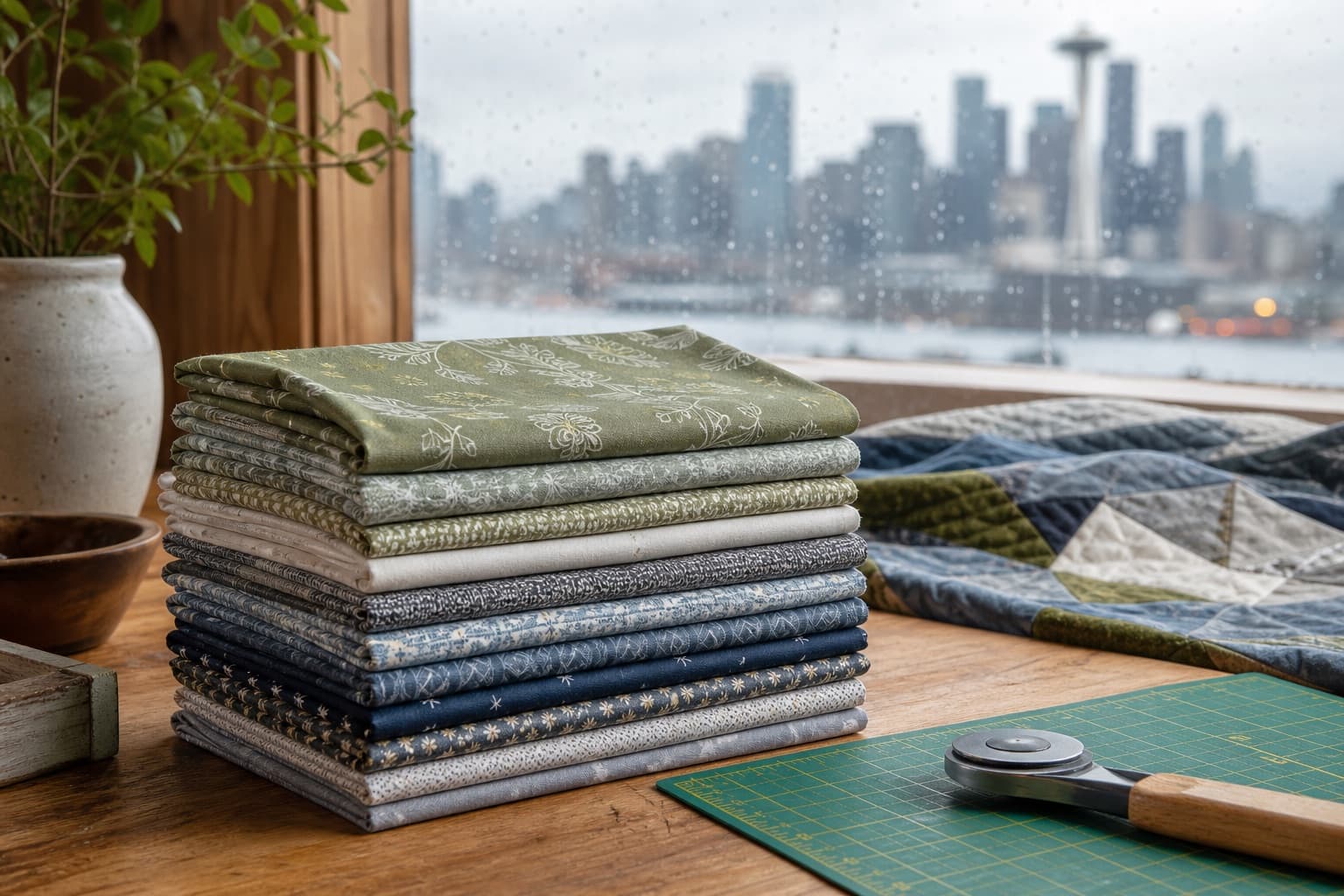
Seattle is a quilting town whether it admits it or not. When the marine layer settles in around late October and doesn't fully lift until the Fourth of July, the region's makers head indoors, put the kettle on, and get serious about slow, tactile projects. A quilt in progress is the perfect companion for eight months of drizzle — and the finished quilt earns its keep on damp evenings when the furnace hasn't quite caught up with the chill coming off the Sound.
But the Pacific Northwest asks particular things of a quilting fabric. It should sew smoothly through long gray-season stretches at the machine, so needle-friendliness matters. It should carry saturated color and crisp prints, because when the sky is the color of wet concrete, your fabric has to supply the light. It should survive frequent washing — muddy trailheads and wet dogs are facts of life here. And at least some of your stash should bring real warmth, because a throw quilt in Seattle is functional equipment from September through June.
Those are the four criteria behind this ranking: needle-friendliness, print quality, washability, and warmth for the gray seasons. What follows is a ranking of fabric types, not shops or brands — every one of these can be found by the yard around Puget Sound, and each earns its place for a different corner of the craft.
Quilting Cotton
Best for: Everyday piecing and nearly every quilt pattern ever written
The plain-weave, medium-weight cotton that the entire craft is built around remains the best all-purpose choice for Seattle quilters. It pieces accurately, presses into crisp seams, and takes printed color better than almost anything else you can put under a needle.
- ✓A stable plain weave holds its shape through cutting, piecing, and pressing, which keeps points sharp and seams true
- ✓Universal needle-friendliness — it forgives long winter sewing sessions on any home machine
- ✓Enormous range of print styles, from saturated modern geometrics to moody botanical prints that suit the Northwest palette
- ✓Machine washes and dries reliably, softening with every cycle instead of wearing out
Worth knowing: On its own it is a three-season fabric — a quilting-cotton quilt with cotton batting is pleasant in July but needs flannel backing or a wool batt to hold its own in a Seattle January.
Batik
Best for: Landscape quilts, applique, and any project that needs deep, glowing color
Wax-resist dyed batiks bring the color depth that gray Seattle skies cannot. Because the dye penetrates the cloth rather than sitting on the surface, batiks are effectively reversible, and their tight, high-thread-count weave gives beautifully crisp piecing.
- ✓Dye saturates both sides of the cloth, so seams and folded bindings show no pale wrong side
- ✓Mottled, watery color variation reads like rain on glass — practically the official texture of the Puget Sound region
- ✓The dense weave resists fraying, which makes batiks a favorite for intricate applique and small piecing
- ✓Colorfast once properly prewashed, standing up to years of laundering
Worth knowing: That tight weave is harder on needles and less forgiving of unpicked stitches, so keep a fresh sharp needle in the machine and commit to your seams.
Cotton Flannel
Best for: Quilt backings, cabin-style quilts, and cold-season throws
If any fabric was engineered for a Seattle November, it is cotton flannel. The napped surface traps a layer of warm air that plain cotton cannot, turning an ordinary quilt into the one everybody fights over when the rain sets in.
- ✓The brushed nap adds genuine loft and warmth — the single biggest comfort upgrade available to a quilt in this climate
- ✓Soft against the skin from the first wash, no breaking-in period required
- ✓Widely available in plaids and heathered solids that suit the flannel-forward Northwest aesthetic
- ✓Sews easily on a home machine with a slightly longer stitch and a walking foot
Worth knowing: Flannel shrinks more than smooth cotton and can stretch on the bias, so prewash it hot, dry it fully, and handle cut edges gently.
Cotton Lawn
Best for: Lightweight quilts, whole-cloth projects, and fine English paper piecing
Lawn is the fine, silky-smooth cousin of quilting cotton — lighter in weight, higher in thread count, and printed with a delicacy that heavier cloth cannot match. In a quilt it drapes like a second skin and rewards careful piecing with an almost heirloom hand.
- ✓Exceptionally smooth and needle-friendly; it glides under the presser foot
- ✓Fine yarns carry intricate, painterly prints with remarkable clarity
- ✓Light weight makes an airy summer quilt for the two months Seattle actually gets summer
- ✓Presses flat beautifully, so seams nearly disappear
Worth knowing: Its lightness cuts both ways — lawn shifts more during cutting and offers little warmth, so stabilize carefully and save it for tops rather than winter workhorses.
Double Gauze
Best for: Baby quilts, simple large-piece designs, and ultra-soft throws
Two layers of airy cotton gauze tacked together at intervals, double gauze is the crinkly, cloud-soft fabric behind the modern baby-quilt boom. It breathes well, gains character with every wash, and feels weightless in a way no other quilting fabric does.
- ✓Unmatched softness straight off the bolt, and it only gets softer with laundering
- ✓The double-layer structure adds gentle warmth without weight — ideal for damp, mild Northwest indoor temperatures
- ✓The signature crinkled texture hides minor piecing imperfections gracefully
- ✓Breathable enough for year-round use, from ferry-deck summer evenings to overheated winter living rooms
Worth knowing: The loose, shifty weave makes precise piecing a challenge, so favor big blocks and simple layouts over tiny points.
Linen and Linen-Cotton Blends
Best for: Modern minimalist quilts, low-volume backgrounds, and textured solids
Linen brings a natural slubbed texture and quiet, earthy palette that pairs perfectly with the driftwood-and-evergreen sensibility of Northwest design. Blended with cotton, it keeps that character while behaving far better under the needle.
- ✓Visible slub texture adds depth to solids, so even a simple quilt looks rich
- ✓Linen-cotton blends tame linen’s wrinkling and raveling while keeping its handsome matte surface
- ✓Naturally strong fibers that shrug off decades of washing
- ✓The muted, mineral color range flatters low winter light instead of fighting it
Worth knowing: Pure linen frays enthusiastically and creases hard, so most quilters are happier with a blend and a generous seam allowance.
Cotton Sateen
Best for: Whole-cloth quilts, lustrous solids, and elegant backings
Sateen weaves its cotton yarns into a smooth, subtly lustrous surface that catches what little winter light Seattle offers. In a quilt it reads as quietly luxurious, and its dense weave gives solids a depth that plain weave cannot.
- ✓The satin-weave face gives solid colors a soft sheen — a welcome glow in dim gray-season rooms
- ✓Dense construction means good durability and opacity, even in pale colors
- ✓Smooth surface shows off quilting stitches beautifully, making it a favorite for whole-cloth and heavily quilted designs
- ✓Still all cotton, so it presses, washes, and wears like the rest of the stash
Worth knowing: The long surface floats can snag and show needle marks, so unpick with care and test your stitch length on a scrap first.
Brushed Cotton
Best for: Cozy backings and cool-weather quilts that still need precise piecing
Brushed cotton splits the difference between smooth quilting cotton and full flannel: one lightly napped face for softness and warmth, with less bulk and less stretch than flannel brings. It is the quiet workhorse of the cold-season stash.
- ✓A light nap adds real coziness while staying easier to piece accurately than flannel
- ✓Less shrinkage and bias stretch than heavier napped cloth
- ✓Prints remain crisp on the brushed face, so you keep pattern clarity along with softness
- ✓Excellent as a backing that makes any quilt instantly more inviting on a damp evening
Worth knowing: The nap has a direction and can pill slightly with heavy use, so cut consistently and wash it gently.
Ikat
Best for: Statement blocks, medallion centers, and globally inspired quilts
Ikat is patterned by tie-dyeing the yarns before weaving, which gives its motifs a signature blurred edge — like a design seen through a rain-streaked window. For quilters who want pattern with soul, cotton ikat delivers texture and story in a single cloth.
- ✓The feathered, slightly out-of-focus patterning is woven in, not printed on, so it never washes off or fades unevenly
- ✓Both sides of the cloth carry the design, giving flexibility in cutting and piecing
- ✓Handwoven character and slubbed texture add depth that flat prints cannot match
- ✓Cotton ikats sew and press like familiar quilting cotton once stabilized
Worth knowing: Weight and weave vary widely from bolt to bolt, so buy a little extra, prewash, and pair loosely woven ikats with a stabilizing press of starch.
Percale Sheeting
Best for: Seam-free quilt backings and crisp, breathable summer quilts
Smooth, matte, and woven extra wide, cotton percale solves the most tedious problem in quiltmaking: the pieced backing. One width of percale can back a full quilt with no seams at all, and its crisp plain weave quilts cleanly by machine or hand.
- ✓Extra-wide widths eliminate backing seams, saving yardage, time, and bulk
- ✓The tight one-over-one-under plain weave is durable and beautifully smooth against the skin
- ✓Crisp, cool hand balances a warm flannel or napped top for year-round comfort
- ✓Launders exceptionally well — the same trait that makes it a sheeting classic makes it a low-maintenance quilt back
Worth knowing: High-thread-count percale can be dense enough to resist hand quilting, so needle a test corner before committing to a hand-stitched finish.
How to Choose
Match the Weight to the Season You Are Sewing For
Quilting fabrics mostly live between about 100 and 180 GSM, and in a climate with an eight-month cool season that range matters. Lawn and double gauze sit at the light end and make airy quilts for the brief, glorious Northwest summer. Standard quilting cotton, batik, and sateen occupy the middle and work year-round depending on the batting you pair them with. Flannel and brushed cotton anchor the heavy end and are the difference-makers for quilts that actually get used from October to May. A practical Seattle stash leans one weight class warmer than the pattern calls for.
Read the Weave Before You Buy
Hold the fabric up to the window light. A tight, even plain weave — the hallmark of good quilting cotton, batik, and percale — pieces accurately and resists fraying. Looser or specialty constructions like double gauze and handwoven ikat bring wonderful texture but demand simpler blocks, gentler handling, and often a pressing of starch. Napped fabrics like flannel hide the weave under a brushed surface; check that the underlying cloth is dense rather than sleazy by seeing how much light passes through. If you can easily shift the yarns with a thumbnail, expect the fabric to shift on your cutting mat too.
Plan for the Wash, Because There Will Be Many
A quilt that lives in a Pacific Northwest household gets washed — mud, moss, wet dog, and spilled coffee guarantee it. Prewash anything with significant shrinkage (flannel especially) and anything hand-dyed, including batiks, until the rinse water runs clear. Favor fabrics that improve with laundering: quilting cotton, double gauze, and percale all soften and crinkle attractively over time. Warm wash, low tumble, and out of direct sun is the safe default for nearly everything on this list; skip the sun-drying advice entirely from November through March, when there is no sun to speak of.
Buy Color for Gray Light
Fabric that looks lively under shop lighting can go flat under a low overcast sky, which is the light your quilt will actually live in most of the year. Saturated batiks, deep-dyed solids, and high-contrast prints hold their presence in dim rooms, while very pale low-volume palettes can wash out to nothing. When auditioning fabric, look at it near a north-facing window on a cloudy day — in Seattle, finding one is never a problem. A quilt built with at least a few glowing, saturated pieces will earn its keep as indoor color therapy all winter long.
Frequently Asked Questions
Do I really need to prewash quilting fabric in Seattle?
For flannel, batiks, and hand-dyes, yes — flannel can shrink noticeably and hand-dyed cloth can bleed for several washes. For stable commercial quilting cotton, prewashing is a matter of preference: skipping it keeps the crisp finish for piecing, while washing first prevents the puckered look after the quilt’s first laundering. In a region where quilts are washed often, most careful quilters prewash anything destined for a bed or a couch.
What batting pairs best with these fabrics for a damp climate?
Cotton batting is the versatile default and breathes well in mild, humid indoor air. For real gray-season warmth, wool batting adds loft and insulation without much weight and handles damp air gracefully. Pairing a flannel or brushed-cotton backing with wool batting produces the warmest practical combination for a Puget Sound winter quilt.
Is flannel too difficult for a beginner quilter?
Not at all, if you respect three rules: prewash and machine-dry it before cutting, use a walking foot with a slightly longer stitch, and choose a pattern with larger pieces. Flannel’s stretch punishes tiny triangles but is barely noticeable in big squares and strips. Many Northwest quilters make a simple flannel throw as an early project precisely because the result is so immediately useful.
Can I mix double gauze or linen with regular quilting cotton in one quilt?
Yes, and the texture contrast can be beautiful, but stabilize the looser fabric first. A light press of spray starch on double gauze or linen brings its behavior closer to quilting cotton, and cutting slightly generous pieces gives you trimming room. Keep the mixed-fabric blocks simple, and expect the finished quilt to crinkle unevenly — most people count that as charm.
How much should the damp Northwest climate change how I store my stash?
More than in drier regions. Store fabric off exterior walls and off concrete floors, ideally in a room that stays heated through winter, because sustained humidity invites mustiness and, in bad cases, mildew. Breathable storage — open shelving or cotton bags rather than sealed plastic bins — lets the fabric equalize, and a small dehumidifier in a basement sewing room is a worthwhile investment west of the Cascades.