Puget Sound, Washington
The Best Fleece Fabrics Around Puget Sound
By Sage McKenzie, Pacific Northwest Textile Writer · July 9, 2026
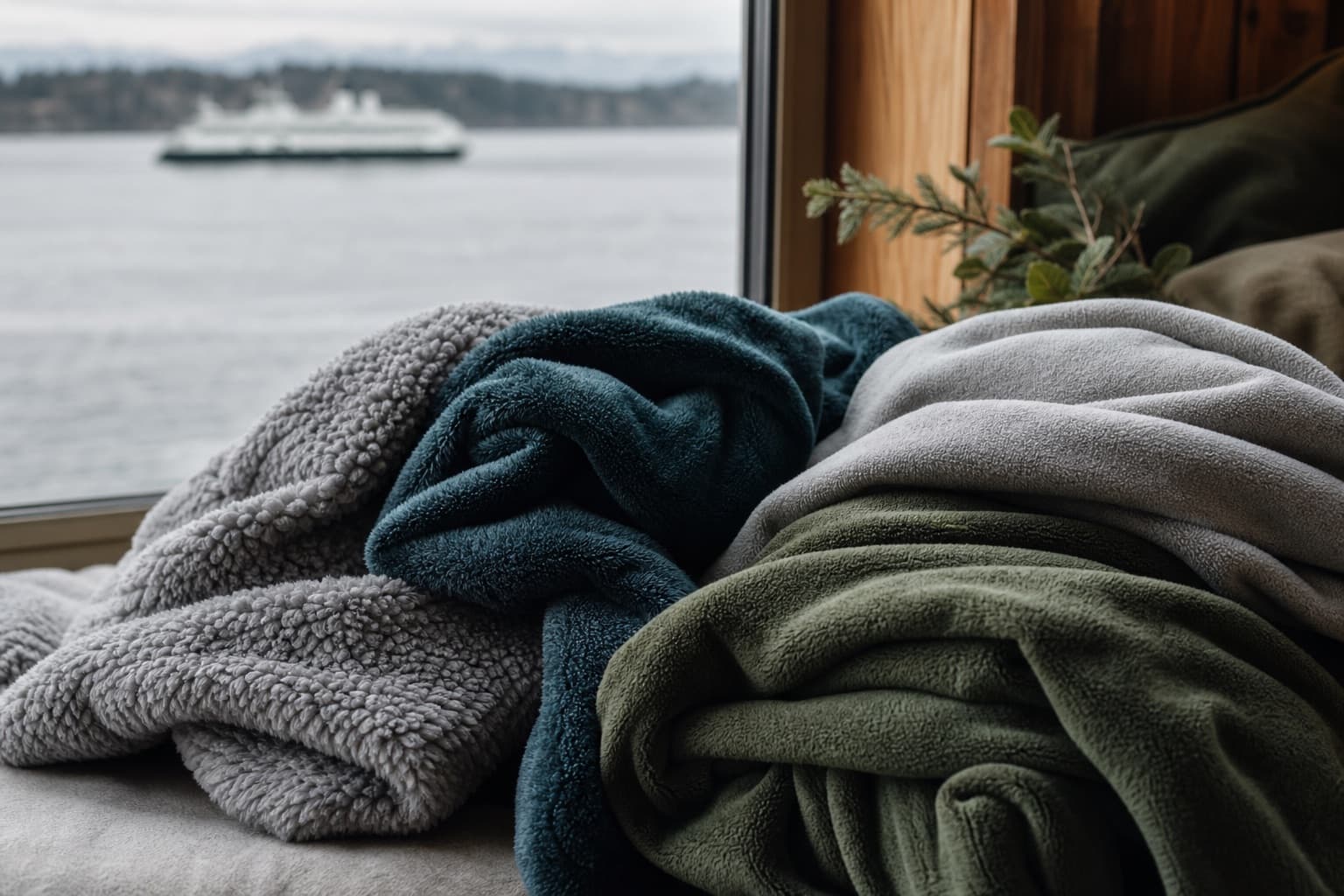
There is a particular kind of cold around Puget Sound that never quite shows up in the forecast. The thermometer says fifty-two, but the ferry deck wind coming off Elliott Bay says otherwise, and the drizzle at the trailhead has a way of finding every gap in a jacket. This is not a climate for maximum insulation; it is a climate for smart insulation — layers that stay warm when the air is saturated, dry fast between showers, and shrug off a breeze without turning into a sauna on the climb.
Fleece was practically invented for this weather. Because it is almost always polyester, it absorbs very little moisture, keeps most of its loft when damp, and dries on your body during the walk from the dock to the coffee shop. But fleece is not one fabric — it is a whole family, from whisper-thin microfleece to shaggy sherpa pile, and each member behaves differently when the marine layer rolls in.
This guide ranks the fleece fabrics that make the most sense between Olympia and Bellingham, judged on four things: warmth-to-weight, pilling resistance, wind resistance, and moisture behavior. The rankings reflect fabric types and constructions, not brands — what to look for on the bolt or the hang tag, whatever label happens to be sewn into it.
Midweight Polar Fleece (200-Weight)
Best for: All-around midlayers and everyday jackets
The workhorse of the Sound. A double-faced knit brushed and sheared on both sides, 200-weight polar fleece hits the sweet spot between the loft of a heavy pile and the packability of a light layer. It is warm enough for a February ferry crossing and breathable enough for the switchbacks up Mount Si.
- ✓Excellent warmth-to-weight ratio — traps a thick layer of still air without the bulk of wool
- ✓Polyester fibers absorb under one percent of their weight in water, so drizzle never soaks in
- ✓Dries remarkably fast, often on-body between rain showers
- ✓Versatile across three seasons of Puget Sound weather as a midlayer or standalone
Worth knowing: Standard polar fleece is nearly transparent to wind, so it needs a shell over it on an exposed ferry deck.
Microfleece (100-Weight)
Best for: Base and midlayers for hiking, running, and bike commutes
The thinnest, lightest member of the fleece family, with a short, dense nap that feels like brushed suede. Microfleece is the layer that lives in a daypack from October through June, because it adds real warmth for almost no weight or volume. It is also the best-behaved fleece under other layers.
- ✓Outstanding packability — compresses to almost nothing in a pack or pannier
- ✓Low bulk layers cleanly under rain shells without binding at the shoulders
- ✓Breathes exceptionally well, making it the top choice for aerobic trail days
- ✓Fine, tight-knit face pills less than loftier fleeces
Worth knowing: On its own it is only enough for mild days — it is a system piece, not a standalone winter layer.
Recycled-Poly Fleece
Best for: Environmentally minded sewists and shoppers
Functionally identical to virgin polyester fleece, recycled-poly fleece is spun from reclaimed PET — often post-consumer bottles — and it performs the same in the rain. For a region that votes with its closet on environmental questions, it is the easy conscience pick, available in everything from 100-weight to heavy pile.
- ✓Same hydrophobic, quick-dry behavior as conventional polyester fleece
- ✓Diverts plastic from the waste stream and typically has a lower production footprint
- ✓Available across the full range of fleece weights and constructions
- ✓Increasingly easy to find on bolts and in finished garments alike
Worth knowing: Like all polyester fleece, it sheds microfibers in the wash, so a filter bag or lint-trapping laundry accessory is worth using.
Sweater Fleece
Best for: Trail-to-town layers and everyday Pacific Northwest uniform pieces
A knit-face fleece that looks like a heathered wool sweater on the outside and hides a soft brushed pile inside. Sweater fleece solved a very Seattle problem: one layer that works at the trailhead in the morning and the taproom in the evening. The tighter knit face also blocks noticeably more wind than a brushed-face fleece.
- ✓Knit outer face resists wind better than open, brushed polar fleece
- ✓Presentable enough for offices and restaurants — the definitive trail-to-town fabric
- ✓Heathered yarns hide wear, lint, and the occasional coffee splash
- ✓Keeps fleece moisture behavior while reading as knitwear
Worth knowing: It is a bit heavier for its warmth than plain polar fleece, so it is more about versatility than pure performance.
Fleece-Backed Softshell
Best for: Ferry decks, shoreline walks, and windy winter commutes
Not a pure fleece, but the answer to fleece's biggest weakness in this region: wind. A softshell bonds a tightly woven, water-shedding stretch face to a brushed fleece backing, producing one fabric that laughs at the gale on the Edmonds–Kingston crossing. When the forecast says breezy with showers — so, most days — this is the fabric that stays on all day.
- ✓The woven face blocks the wind that sails straight through ordinary fleece
- ✓A durable water-repellent finish sheds drizzle and light rain outright
- ✓Stretchy and quiet, with far better breathability than a hardshell rain jacket
- ✓Fleece backing supplies warmth next to skin without a separate layer
Worth knowing: It is heavier and far less packable than an equivalent-warmth fleece, and sustained rain will eventually soak through.
Sherpa Fleece
Best for: Jacket linings, vests, and cold-weather loungewear
The shaggy, sheepskin-look pile that lines collars, jacket bodies, and half the blankets in the Sound. Sherpa's deep, lofty pile traps an enormous amount of air, making it one of the warmest fleeces per layer you can wear. It is the fabric of choice for standing still in the cold — dock fishing, sideline parenting, campsite mornings.
- ✓Deep pile delivers serious static warmth — among the loftiest of all fleece types
- ✓Doubles as lining and outer fabric, adding warmth without a separate insulation layer
- ✓Retains most of its loft when damp, unlike real shearling
- ✓Cozy, tactile surface that has become a cornerstone of Northwest casual style
Worth knowing: The open pile catches wind and drizzle, mats with heavy wear, and adds real bulk under a shell.
Sweatshirt Fleece
Best for: Hoodies, crewnecks, and around-town layers
The classic hoodie fabric: a knit face with a brushed, napped back, traditionally cotton or a cotton-poly blend. It is the default around every college campus and coffee counter from Tacoma to Bellingham, and for indoor-outdoor city life it is hard to beat. Choose the blend carefully, though, because cotton and Puget Sound drizzle are old enemies.
- ✓Smooth knit face is durable, printable, and resists snags
- ✓Brushed interior is genuinely cozy against the skin
- ✓Cotton-blend versions breathe well and feel less clammy indoors than all-poly fleece
- ✓Easy to sew and easy to care for — a staple for first garment projects
Worth knowing: High-cotton versions soak up rain, dry slowly, and lose their warmth when wet — save them for dry days or under a shell.
Berber Fleece
Best for: Vests, jacket linings, and structured cold-weather layers
A nubby, looped-pile fleece with a distinctive pebbled texture, usually flecked in natural-looking heathers. Berber sits between sherpa and polar fleece: loftier and warmer than a flat fleece, but denser and more structured than shaggy pile. It has quietly become a favorite for vests and jacket linings that need warmth with a little more polish.
- ✓Dense looped pile traps warmth efficiently for its thickness
- ✓Textured, flecked surface hides pilling and wear better than smooth fleece
- ✓More structured than sherpa, so garments hold their shape
- ✓Loops resist matting and crushing over years of use
Worth knowing: The looped surface can snag on branches and velcro, and it is not the fabric for bushwhacking.
French Terry
Best for: Lightweight pullovers, joggers, and shoulder-season layers
Technically the unbrushed cousin of sweatshirt fleece — a knit with soft loops on the back instead of a napped pile. French terry is the lightest, most breathable fabric in this family, which makes it the right call for the Sound's mild, damp shoulder seasons when a true fleece would overheat. Think of it as fleece for fifty-eight degrees and misting.
- ✓Lightest and most breathable option in the fleece family
- ✓Loops absorb and move light moisture, keeping skin comfortable during activity
- ✓Drapes better than napped fleece, so garments look tailored rather than sporty
- ✓Ideal weight for the long mild stretch from April to October
Worth knowing: It offers only modest warmth and no wind resistance, so it is a mild-day fabric, not a winter one.
How to Choose
Understand Fleece Weights
Fleece is graded by fabric weight, usually in grams per square meter (GSM), and the old 100/200/300 shorthand still maps to it: roughly light (under about 200 GSM), mid (200–300 GSM), and heavy (300 GSM and up). Around Puget Sound, midweight earns its keep most days of the year — warm enough for winter layering, not so warm that a brisk walk turns into a steam bath. Lightweight microfleece is the packable insurance layer, and heavyweight fleece is best reserved for standing still in genuine cold: early-morning ferries, winter beach walks, drafty cabins.
Match the Construction to the Wind
The single biggest performance difference between fleece types is how they handle moving air. Brushed, open-faced fleeces like polar fleece and sherpa are superbly warm in still air and nearly useless in a stiff onshore breeze. Knit-faced sweater fleece cuts the wind noticeably; bonded softshells and windproof-membrane fleeces stop it almost entirely. If your life involves ferry decks, bluff trails, or waterfront running paths, either choose a wind-resistant construction or plan on carrying a light shell — there is no third option the Sound will accept.
Judge Pilling Before You Buy
Pilling — those small fiber balls that appear at cuffs, under pack straps, and anywhere fabric rubs — is the main way fleece ages badly. Denser, shorter naps like microfleece and tightly sheared polar fleece resist it best; loose, lofty, bargain-grade fleece pills fastest. On the bolt or in the store, rub the face of the fabric firmly with your palm for a few seconds: if fibers rough up or ball immediately, the garment will look tired within a season. An anti-pill finish is worth seeking out on any fleece you plan to wear under a backpack.
Care for It So It Keeps Performing
Fleece is low-maintenance but not no-maintenance. Wash it cold, inside out, with other soft fabrics — zippers and velcro are the fastest route to a pilled, snagged face. Skip fabric softener, which coats the fibers and dulls both wicking and loft, and skip the dryer heat too: polyester is heat-sensitive, and a hot cycle can permanently flatten the pile. Line drying is fast anyway, since the fabric holds so little water. A wash bag that traps microfibers is a sensible addition for any polyester fleece, given how much of our laundry water ends up in the Sound.
Frequently Asked Questions
Is fleece actually a good choice for Puget Sound's wet climate?
Yes — arguably better than almost anywhere else. Polyester fleece absorbs almost no water, keeps most of its insulating loft when damp, and dries quickly, which is exactly what a drizzle-and-clear-and-drizzle-again climate demands. Its one real weakness is wind, which is easily solved with a light shell or a wind-resistant construction like softshell.
What fleece weight should I choose for year-round use here?
Midweight — the classic 200-weight class, roughly 200 to 300 GSM — is the most versatile single choice for the Sound's mild, damp winters and cool summer evenings. Add a 100-weight microfleece for active days and layering, and most people here never need a third. Heavyweight 300-class fleece is only necessary for prolonged standing around in real cold.
Why does my fleece feel useless on the ferry deck?
Because standard brushed fleece has an open structure that wind passes almost straight through, stripping away the warm air trapped in the pile. The fabric is still insulating; the breeze is simply removing the insulation faster than your body replaces it. A thin wind shell over the fleece, or a knit-faced or membrane-backed fleece, restores nearly all of that warmth.
Does fleece stay warm when it gets wet?
Better than almost any natural fiber. Polyester fibers themselves absorb well under one percent of their weight in water, so a damp fleece retains most of its loft and much of its warmth, and it dries fast — often on your body. Cotton-rich sweatshirt fleece is the exception: once soaked it stays soaked, which is why it belongs on dry days or under a shell.
How do I keep fleece from pilling?
Start with a dense, short-napped, anti-pill fleece, since loose lofty fleece will pill no matter how gently it is treated. Then wash cold and inside out, keep it away from velcro and zippers in the load, and air dry. Pills that do form can be shaved off carefully with a fabric shaver without harming a dense pile.