Washington State
The Best Rain-Ready Fabrics in Washington State
By Sage McKenzie, Pacific Northwest Textile Writer · May 12, 2026
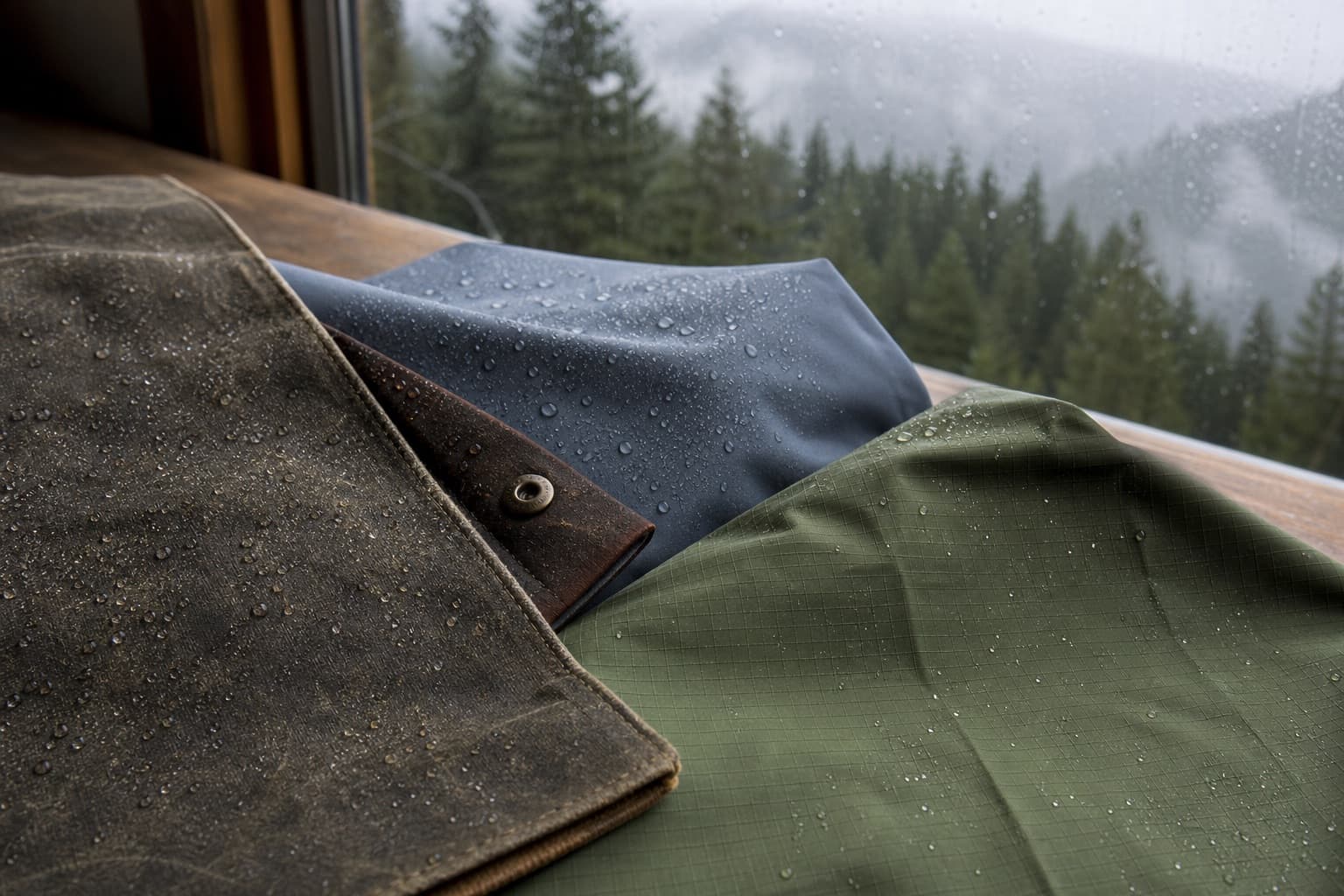
Ask anyone west of the Cascades and they’ll tell you: Washington rain is less an event than a season. From October through May, the sky settles into a soft gray drizzle that soaks through cheap fabric in minutes and turns cotton hoodies into cold sponges. It rarely pours the way it does elsewhere — instead it mists, spits, and lingers, which means the fabrics that work here need to shed persistent moisture for hours, not just survive a five-minute cloudburst.
That climate shapes what sewists and makers in the Evergreen State reach for. A fabric that thrives in Seattle, Olympia, or the Olympic Peninsula has to balance four things: genuine water resistance, enough breathability to handle a ferry-dock walk or a muddy trailhead climb, durability against blackberry brambles and wet gear, and reasonable behavior under a home sewing machine. A perfectly waterproof fabric that traps sweat or shreds needles isn’t much of a win.
This guide ranks the fabric types that best fit that brief — from heritage waxed canvas to modern membrane laminates — with honest notes on where each one shines and where it falls short. Whether you’re sewing a field jacket for mushroom season or a pack cover for the Enchantments, one of these will keep the damp on the outside.
Waxed Canvas
Best for: Field jackets, totes, hat brims, and gear that lives outdoors
Waxed canvas is cotton duck impregnated with paraffin or a wax blend, and it might be the most Pacific Northwest fabric there is. It sheds drizzle beautifully, ages into a personal patina, and can be re-waxed at home for decades of service.
- ✓Excellent resistance to sustained drizzle and mist, the exact precipitation Washington delivers most
- ✓Extremely durable against abrasion — brambles, bark, and boat rails barely mark it
- ✓Re-waxable at home, so a jacket or tote can be refreshed rather than replaced
- ✓Sews on a home machine with a heavy needle and develops character with every crease
Worth knowing: It is heavy, stiff when new, and not breathable, so it suits outer layers and bags better than active-wear.
ePTFE Laminate
Best for: Technical rain shells and alpine outerwear
Expanded PTFE membrane laminates are the gold standard for waterproof-breathable performance. A microporous membrane bonded between face fabric and liner blocks liquid water while letting vapor escape — exactly what a sweaty climb up Mount Si in the rain demands.
- ✓True waterproofing with meaningful breathability, the hardest combination to achieve
- ✓Lightweight and packable for a shell that disappears into a daypack
- ✓Handles all-day rain, wet snow, and wind in one layer
Worth knowing: Seams must be taped or sealed to stay waterproof, which pushes construction beyond casual home sewing.
Hardshell Fabric
Best for: Serious rain jackets, pants, and mountaineering shells
Hardshell fabrics are the broader family of membrane-backed or coated shell textiles built for full weather protection. Crisp, tough, and wind-blocking, they are what most Washingtonians picture when they think of a proper rain jacket.
- ✓Fully windproof and waterproof, ideal for exposed ridgelines and ferry decks
- ✓Durable face fabrics stand up to pack straps and scree
- ✓Available in a range of weights, from featherlight emergency shells to burly mountain fabric
Worth knowing: The crisp hand can feel stiff and noisy for everyday town wear, and slippery layers demand patient pinning at the machine.
Softshell
Best for: Commuter jackets, hiking pants, and drizzle-day layers
Softshell trades absolute waterproofing for stretch, quiet comfort, and superior breathability. In Washington’s frequent light-drizzle days, that trade is often the right one — a DWR-treated softshell sheds mist while venting the heat of a brisk walk or bike commute.
- ✓Highly breathable, so you stay dry from the inside as well as the outside
- ✓Four-way stretch moves with you on trails, ladders, and bike frames
- ✓Soft, quiet drape that works as everyday clothing, not just gear
- ✓Forgiving to sew compared with slick laminates
Worth knowing: It is water-resistant rather than waterproof, so it will eventually wet through in a genuine downpour.
Ripstop Nylon
Best for: Pack covers, tarps, wind shells, and ultralight gear
Ripstop nylon weaves reinforcing threads into a grid that stops tears from spreading, and coated versions shrug off rain at a remarkably low weight. It is the backbone of Northwest ultralight culture — tarps, pack covers, wind shells, and stuff sacks all start here.
- ✓Outstanding strength-to-weight ratio for packable rain gear
- ✓The ripstop grid stops snags from becoming catastrophic tears
- ✓Coated variants are effectively waterproof for tarps and covers
- ✓Inexpensive enough to prototype and experiment freely
Worth knowing: Slippery and shifty under the presser foot — a walking foot and sharp microtex needle make it far more cooperative.
Rainwear Gabardine
Best for: Trench coats, tailored raincoats, and city outerwear
Gabardine’s steep, tightly packed twill weave was invented for foul weather, and rainwear versions remain one of the most elegant answers to a wet climate. The dense weave alone sheds light rain, and a modern water-repellent finish makes it a genuinely practical trench or car-coat fabric.
- ✓Dense twill construction is inherently water-shedding before any finish is applied
- ✓Tailors beautifully — the rare rain fabric that presses into crisp lapels and clean seams
- ✓Breathable and comfortable for all-day wear, indoors and out
Worth knowing: It resists showers rather than storms, so plan on an umbrella when the clouds truly open up.
Oilcloth
Best for: Utility aprons, tote linings, picnic and market gear
Traditional oilcloth — and its modern vinyl-faced descendants — puts an unbroken waterproof surface over a woven base. It is the fabric of fishing-town heritage on the Washington coast, and it remains unbeatable where you need a truly impermeable, wipe-clean layer.
- ✓Completely waterproof surface with no wetting-out, ever
- ✓Wipes clean of mud, fish scales, and garden soil in seconds
- ✓Deep maritime heritage that suits coastal, workwear-inspired projects
Worth knowing: Zero breathability and a stiff hand limit it to accessories and workwear rather than garments you’ll wear on a walk.
PU-Coated Fabric
Best for: Budget rain slickers, gear bags, and kids’ outerwear
A polyurethane coating on the back of a nylon or polyester weave delivers dependable waterproofing at a friendly price. This is the workhorse behind classic rain slickers, gear bags, and the bright shells kids wear to every soggy soccer practice in the state.
- ✓Reliable waterproofing at the lowest cost of any option on this list
- ✓Widely available in many colors and weights
- ✓The coating doubles as a seam-friendly surface for taping and sealing
Worth knowing: PU coatings breathe poorly and can eventually hydrolyze and peel after years of hard use and humid storage.
Taslan
Best for: Casual jackets, anoraks, and everyday drizzle wear
Taslan is air-textured nylon with a soft, cotton-like matte face that hides its technical nature. With a DWR finish it sheds drizzle while looking and sounding like a normal garment fabric — no crinkle, no shine — which makes it a favorite for everyday Northwest outerwear.
- ✓Matte, quiet, fabric-like hand that reads as clothing rather than gear
- ✓Durable and abrasion-resistant thanks to its textured nylon yarns
- ✓Dries quickly and stays comfortable through misty, in-and-out days
Worth knowing: Its water resistance comes mostly from the finish, which needs periodic renewal to keep beading.
How to Choose
Match the Fabric to the Rain You Actually Get
Most of western Washington’s precipitation is light and long, not heavy and brief. For drizzle and mist, water-resistant but breathable fabrics — softshell, rainwear gabardine, DWR-finished taslan — keep you drier overall because they vent body heat instead of trapping it. Reserve fully waterproof laminates and coated fabrics for storm shells, coastal trips, and gear that sits out in the weather. East of the mountains, where rain is rarer but wind is fiercer, prioritize windproofing and durability over maximum waterproof ratings.
Understand Weight and Construction
Fabric weight, usually given in grams per square meter (GSM) or ounces per square yard, predicts both protection and comfort. Ultralight ripstops under roughly 70 GSM pack tiny but feel fragile; mid-weight shells around 100–200 GSM balance durability and drape for jackets; waxed canvas and oilcloth commonly run heavier still and suit bags and workwear. Weave matters too: tight plain weaves and steep twills shed water on their own, while looser constructions rely entirely on coatings and finishes to stay dry.
Plan Your Seams Before You Cut
A waterproof fabric with unsealed seams is a colander. Needle holes let water wick straight through laminates and coated fabrics, so true rain shells need taped seams, seam sealant, or clever construction like flat-felled seams placed away from water flow. Water-resistant fabrics such as waxed canvas and gabardine are more forgiving — their fibers swell or their wax migrates to close small holes. If seam taping sounds daunting, choose a fabric whose water resistance lives in the material itself rather than in a membrane.
Think About Care and Longevity
Rain fabrics fail in different ways, and care determines how soon. DWR finishes wear off with abrasion and washing but revive with heat or re-treatment; wax coatings need occasional re-waxing but essentially last forever; PU coatings degrade slowly with humidity and cannot be restored. Never machine-wash waxed canvas or oilcloth — brush and wipe them instead — and wash membrane laminates with technical detergents that will not clog their pores. A little maintenance keeps any of these fabrics working through many Washington winters.
Frequently Asked Questions
What is the difference between waterproof and water-resistant fabric?
Waterproof fabrics block liquid water entirely, usually via a membrane or continuous coating, and will not wet through even under pressure. Water-resistant fabrics shed light rain through tight weaves, wax, or a DWR finish but eventually soak through in sustained heavy rain. For most of western Washington’s drizzle, well-made water-resistant fabric is enough; save true waterproofing for storms, coastlines, and gear left out in the weather.
Can I sew waterproof fabrics on a regular home sewing machine?
Yes, with a few adjustments. Use a sharp microtex or denim needle in an appropriate size, lengthen your stitch slightly, and fit a walking foot or Teflon foot so coated surfaces feed evenly. The bigger challenge is seams: every needle hole is a potential leak, so plan on seam sealant or iron-on seam tape for any project that must stay truly dry.
How do I restore water repellency to a jacket that has stopped beading?
For DWR-finished fabrics, start by washing the garment clean and tumble-drying on low or pressing with a cool iron — heat often reactivates the finish. If beading still fails, apply a wash-in or spray-on repellency treatment. Waxed canvas is even simpler: warm the fabric and work in a fresh coat of fabric wax, paying attention to seams and high-wear creases.
Is waxed canvas too heavy for a rain jacket?
It depends on the jacket. Lighter waxed canvas in the 7–8 ounce range makes a wearable field jacket for cool, drizzly days, while heavier weights are better suited to vests, hats, and bags. Waxed canvas is not breathable, so it works best as a relaxed-fit outer layer over breathable mid-layers rather than as active hiking wear.
Which fabric should a beginner start with for rain gear?
Start with a DWR-treated softshell or a mid-weight taslan. Both behave much like ordinary garment fabric under the machine, forgive imperfect seams because they do not rely on sealed construction, and still handle the Northwest’s everyday mist. Once you are comfortable, step up to coated ripstop for gear projects and finally to laminates, where seam sealing becomes part of the craft.