Cascade Range, Washington and Oregon
Top Hiking Apparel Fabrics for the Cascades
By Sage McKenzie, Pacific Northwest Textile Writer · July 17, 2026
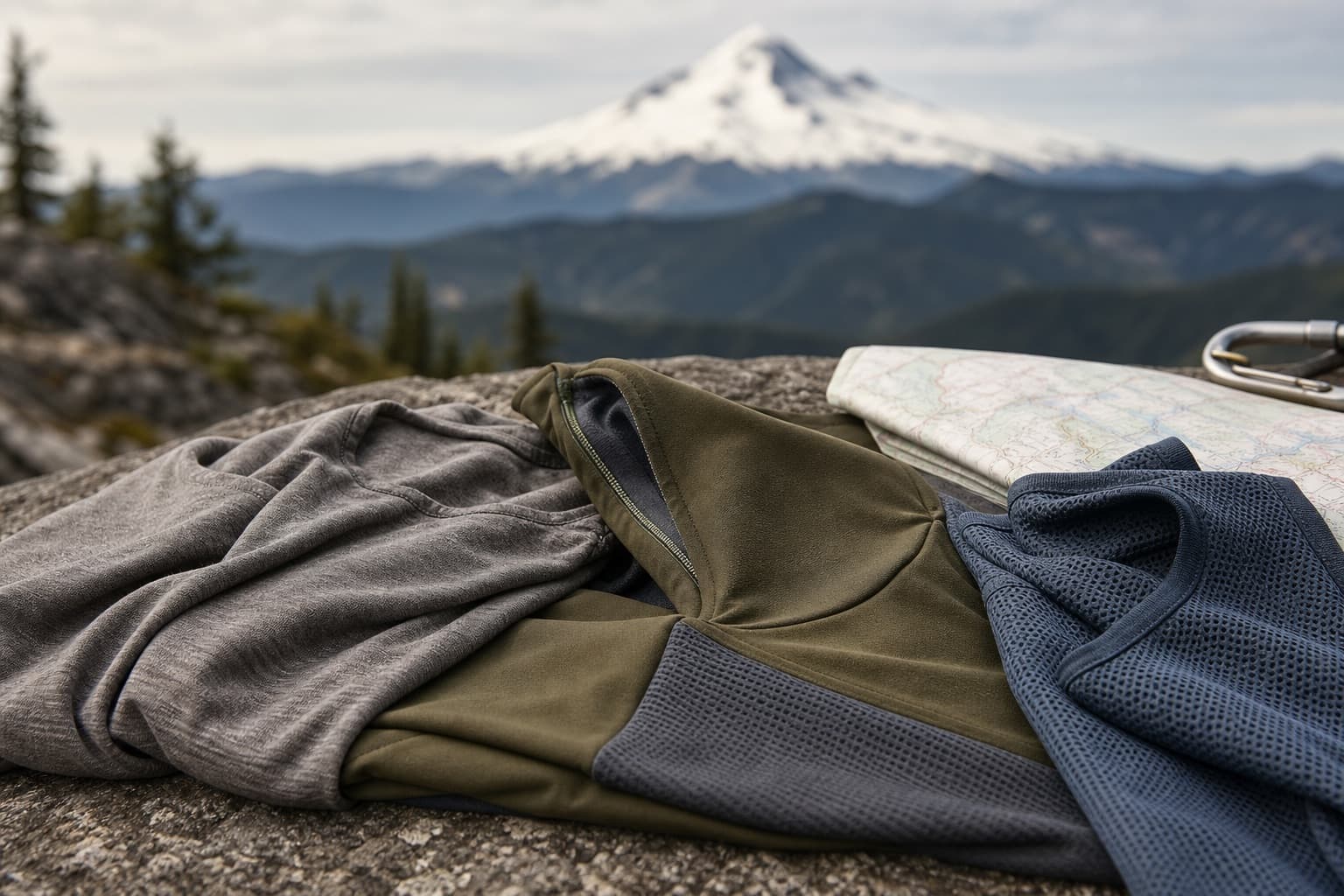
The Cascades do not offer weather so much as a rotation of weathers. A single day on a shoulder-season traverse near Snoqualmie Pass or up the flanks of Mount Hood can serve up drizzle, sideways mist, a sweaty sun break, and a cold wind off a snowfield before the trailhead parking lot comes back into view. Sewing hiking apparel for this range means building for all of it at once, and the fabric choice matters more than any pattern hack or seam finish.
Every fabric in this ranking was judged on four things: moisture management (how it behaves when soaked from the inside, the outside, or both), stretch (because scrambling over blowdowns is part of the deal here), durability (huckleberry brush and basalt scree are unkind), and how well it plays in a layering system. Cascade hiking is layering. Nobody wears one garment from trailhead to summit in this range, so a fabric that fights the layers around it loses points no matter how good it is alone.
One note before the countdown: these are fabric types, not products. The goal is to help home sewists and small-batch makers recognize what to look for on the bolt or in the online listing, whatever the label says. Where a fabric has a full profile in the Fabric Atlas database, the pick links straight to it.
Merino Wool Jersey
Best for: Base layer tees, long sleeves, and neck gaiters
Fine merino knit into a single jersey is the reigning base layer fabric for Cascade conditions, and it earns the crown honestly. It keeps insulating when damp, resists odor over multi-day trips, and feels good against skin across a huge temperature range. In a climate where "slightly wet" is the default state of everything, that damp-warmth property is worth more than any other single trait.
- ✓Wool fibers absorb moisture into their core while the surface stays comparatively dry, so a sweat-soaked merino tee chills far less than a soaked cotton or even polyester one
- ✓Natural odor resistance means one shirt can cover a three-day loop through the Alpine Lakes without clearing out the shelter
- ✓Jersey construction gives easy mechanical stretch for reaching, scrambling, and pack-hoisting without needing spandex
- ✓Comfortable across a wide range, which suits trails that start in cool forest and top out on sun-blasted ridgeline
Worth knowing: Lightweight merino jersey is delicate to sew and to wear, so expect to reinforce shoulder seams and accept a shorter garment lifespan than synthetics.
Stretch Woven Softshell
Best for: Hiking pants, wind-blocking jackets, and scrambling wear
Softshell is arguably the most Cascade-appropriate outer fabric there is: wind-resistant, water-shedding, stretchy, and breathable enough to wear while working hard uphill. On the many days that bring mist and wind rather than a committed downpour, a softshell jacket or pair of pants outperforms a rain shell by staying comfortable instead of clammy.
- ✓Mechanical and spandex stretch move with high steps and scrambles, which stiff coated fabrics simply cannot do
- ✓A DWR-treated face sheds drizzle and wet brush, covering the classic fog-drip conditions of west-side forests
- ✓Far more breathable than any waterproof laminate, so it stays on through sustained climbing
- ✓Densely woven faces shrug off abrasion from scree, granite, and overgrown trail corridors
Worth knowing: Softshell is water-resistant, not waterproof, so it needs a true rain shell riding in the pack as backup.
Three-Layer Hardshell Laminate
Best for: Rain jackets, shell pants, and pack-away storm gear
When the forecast says atmospheric river, nothing substitutes for a laminated waterproof-breathable hardshell. A three-layer construction bonds a membrane between a woven face and a protective backer, producing a fabric that keeps sustained rain out while letting some body vapor escape. In this range, a shell sewn from it is less a garment than an insurance policy that lives in the pack.
- ✓Genuinely waterproof under sustained rain and wet-out conditions, which no coated or DWR-only fabric can claim
- ✓The bonded backer protects the membrane from sweat, sunscreen, and pack-strap abrasion, extending working life
- ✓Sews into light, packable shells that disappear into a pack lid until the clouds commit
- ✓Pairs with taped seams for full storm protection on multi-day trips where retreat is not an option
Worth knowing: Laminates demand seam tape, specialty needles, and careful pattern choices, making them the most technically demanding fabric on this list to sew at home.
Ripstop Nylon
Best for: Wind shirts, ultralight shells, and pack accessories
Lightweight ripstop nylon, with its telltale reinforcement grid, is the workhorse of wind shirts, shell layers, and fast-and-light hiking garments. It packs down to nothing, blocks wind surprisingly well, and the ripstop grid stops small punctures from becoming long tears. On brushy east-side trails and above treeline, that tear resistance earns its keep constantly.
- ✓The woven-in grid arrests tears, so a snag on a silver snag or devils club thorn stays a pinhole instead of a rip
- ✓Exceptional strength-to-weight ratio keeps finished garments featherlight and packable
- ✓Calendered or tightly woven versions block wind well enough to serve as a stand-alone wind layer
- ✓Dries fast after a soaking, a mercy on trips where nothing else does
Worth knowing: Slippery, shifty, and prone to fraying at cut edges, ripstop rewards patient cutting and French or bound seams.
Grid-Back Microfleece
Best for: Midlayer pullovers, vests, and cool-morning hoodies
Microfleece, especially versions knit with a grid or waffle back, is the midlayer that makes the whole Cascade layering system work. It traps warm air in its brushed pile, moves moisture outward from the base layer, and adds almost no bulk under a shell. On a cold start out of a Highway 20 trailhead, it is the layer that comes off twenty minutes in and goes back on at every viewpoint.
- ✓Brushed pile insulates well for its weight and keeps most of that warmth even when damp
- ✓Grid-back constructions channel moisture vapor outward, keeping the base layer from saturating
- ✓Low bulk layers cleanly under a softshell or hardshell without binding at the shoulders
- ✓Machine-washable, quick-drying, and forgiving to sew, which no other insulating fabric matches
Worth knowing: Fleece offers no wind resistance to speak of, so on an exposed ridge it depends entirely on the shell layered over it.
Athletic Mesh
Best for: Ventilation panels, liner layers, and hot-weather tops
Open-structure athletic mesh is the quiet specialist of this list. Used for back panels, side panels, pocket bags, and full warm-weather tops, it dumps heat and moves sweat vapor faster than any solid fabric can. East-side hikes in the Teanaway or on sun-exposed Oregon pumice benefit enormously from mesh placed where the body runs hottest.
- ✓Open knit structure maximizes airflow, venting heat during sustained climbs
- ✓Wicks and dries almost instantly, keeping sweat from pooling under pack straps
- ✓Nearly weightless, so mesh panels add ventilation without adding pack burden
- ✓Ideal for hybrid garments: solid fabric where abrasion hits, mesh where heat builds
Worth knowing: Mesh offers little sun or abrasion protection, so full-mesh garments belong under a pack strap-free of a heavy load and paired with sunscreen.
UPF-Rated Activewear Jersey
Best for: Sun hoodies, high-route shirts, and snowfield travel
The Cascades hide a secret from newcomers: above treeline and on late-summer snowfields, the sun is fierce, and reflection off snow doubles the dose. A tightly knit polyester or nylon activewear jersey with an ultraviolet protection factor rating turns a long-sleeve sun hoodie into wearable shade. It has become the signature garment of high-route season for good reason.
- ✓Dense knit structure blocks ultraviolet light, protecting skin through long exposed miles
- ✓Synthetic fibers wick fast and dry fast, so a sun hoodie doubles as a warm-weather base layer
- ✓Smooth face slides easily under pack straps and additional layers
- ✓Holds its shape and color through seasons of sweat, sunscreen, and frequent washing
Worth knowing: Synthetic jerseys hold odor more readily than merino, so plan on washing after every outing.
Taslan Nylon
Best for: Hiking pants, wind pants, and durable shell garments
Taslan is air-textured nylon woven into a fabric with a soft, cottony hand and none of the crinkle of standard nylon shells. It is quieter, more abrasion-resistant, and more pleasant against skin than slick ripstop, which makes it a favorite for hiking pants and wind pants meant for brushy, off-trail Cascade travel. Think of it as the fabric for garments worn all day rather than pulled out in emergencies.
- ✓Textured yarns give a matte, quiet, fabric-like hand that slick nylons lack
- ✓Tough face stands up to brush-bashing, log straddles, and scree descents
- ✓Sheds light moisture with a DWR finish and dries quickly when it soaks through
- ✓Easier to cut and sew than slippery calendered nylons, a real gift for home sewists
Worth knowing: Taslan runs heavier than lightweight ripstop, so it suits worn-all-day garments better than pack-away layers.
Waffle Knit
Best for: Cold-weather base layers and casual trail thermals
The humble waffle knit, with its grid of raised cells, is thermal underwear engineering that predates every laminate on this list. The three-dimensional texture traps air against the skin while the channels between cells let moisture vapor move, making it a fine heavyweight base or light midlayer for cold-season trips. For snowshoe outings and frosty November forest walks, it remains hard to beat for the price of a knit.
- ✓Cellular texture traps insulating air while weighing less than a solid knit of similar warmth
- ✓Channels between cells promote airflow and vapor movement during effort
- ✓Available in cotton, wool, and synthetic versions, so fiber can be matched to the trip
- ✓Simple to sew on a home machine and forgiving of fit, unlike technical laminates
Worth knowing: Cotton waffle knit belongs in town only; for the mountains, choose wool or synthetic versions that insulate when wet.
How to Choose
Match Fabric Weight to the Layer, Not the Season
Fabric weight in grams per square meter (GSM) is the single most useful number on a listing. Base layer knits typically run light, roughly in the 130 to 200 GSM range, so they wick and dry fast next to skin. Midlayer fleeces sit heavier, and softshells and hardshell laminates heavier still. The mistake to avoid is buying by season: a Cascade July day can need every layer weight at once, from a light knit at the trailhead to a laminate on the summit. Buy by position in the layering system, and the seasons take care of themselves.
Read the Construction: Knit vs. Woven
Knits (jersey, fleece, mesh, waffle) stretch naturally, forgive fit, and belong next to the body or in the middle of the stack. Wovens (softshell, ripstop, taslan, laminate faces) resist wind and abrasion and belong on the outside. A quick hand test tells the story: stretch the fabric on the diagonal and along the grain. Generous stretch in all directions signals a knit for moving layers; firm resistance with maybe a hint of spandex give signals a woven built to take weather and brush. Cascade garments that fail usually fail because a fabric was asked to do the other type of job.
Check the Finish: DWR, Membranes, and UPF
Finishes and laminations do work the base fabric cannot. A durable water repellent (DWR) finish makes drizzle bead and roll off, which is enough for most west-side forest days; a bonded waterproof-breathable membrane is what actually stops sustained rain. For high-elevation sun, look for knits with a stated ultraviolet protection factor, since a loose or lightweight knit without one lets significant light through. Finishes wear off and membranes degrade, so treat them as consumables: DWR can be reapplied at home, while a failing laminate usually means the fabric has reached retirement.
Care for Performance Fabrics So They Keep Performing
Technical fabrics mostly die in the laundry, not on the trail. Wash merino cool and gentle and skip the dryer heat that shrinks and felts it. Keep fabric softener away from anything wicking or DWR-treated, because softener coats fibers and destroys both properties. Fleece sheds fewer microfibers washed cold in a filter bag, and laminates last longest washed rarely, rinsed well, and tumble-dried briefly on low to revive the DWR. A garment sewn from good fabric and cared for this way will outlast several seasons of Cascade abuse.
Frequently Asked Questions
What is the single best fabric for Cascade hiking if only one garment gets sewn?
Start with a merino jersey base layer. It performs in the widest range of Cascade conditions, from drippy forest to windy ridge, and it is the layer worn every single trip regardless of forecast. A simple long-sleeve crew is also one of the most forgiving first technical sewing projects, since jersey stretch hides minor fitting errors.
Do hiking clothes for the Cascades really need to be waterproof?
The everyday layers should not be. Waterproof fabric is far less breathable, so wearing it during effort just trades rain for sweat. The proven approach is water-resistant, breathable garments (softshell, DWR-treated wovens) worn while moving, with one truly waterproof hardshell carried in the pack for committed rain. In this range that shell earns its space often enough to be non-negotiable.
Is cotton ever acceptable for Cascade hiking apparel?
On hot east-side day hikes with a dry forecast, a cotton tee is genuinely pleasant, since its slow evaporation cools the body. Everywhere else in the range, wet cotton loses its insulating value and dries slowly, which is how mild days turn hypothermic above treeline. Save cotton for the post-hike burger stop and sew trail garments from wool or synthetics.
How much stretch should a hiking fabric have?
Base and midlayers should stretch generously in all directions, which knits deliver by construction alone. Outer wovens like softshell benefit from a modest amount of spandex or mechanical stretch, enough that a deep lunge or high step onto a boulder does not bind at the knee or seat. Fully rigid outer fabrics are workable only in roomy, articulated patterns designed to move without stretch.
Which of these fabrics are hardest to sew at home?
Hardshell laminates top the difficulty list because they need seam sealing, careful needle choice, and patterns drafted for non-stretch fabric, and every needle hole is a potential leak. Slippery lightweight ripstop is next, mostly for cutting and edge-finishing challenges. Merino jersey, fleece, waffle knit, and taslan are all friendly to a home machine, and softshell sits comfortably in the middle.